

IN IT’S SEVENTH EDITION, THE DEHRADUN LIT FEST SPARKLED WITH DIVERSE VOICES ON DIVERSE TOPICS – FROM TECH AND DEMOCRACY IN THE CLASSROOM, TO RE-EMBRACING FOLK MUSIC AND POWERFUL STORYTELLING ACROSS MEDIUMS.
BY SANGEETA WADDHWANI
Every lit fest has its own character. This one, set on the iconic Doon School campus, with a vast audience of students, saw a delightful line up of path breakers, educators, authors, activists and culture enthusiasts, all addressing young, energetic minds trying to figure out their lives in a time of tempestuous change. The theme was, tellingly, Vasudhaiva Kuttumbakkam. The world as one family.
DDLF Founder Samraant Virman opened the festival on Children’s Day, as he saw it as “symbolic of the imagination, learning and curiosity the festival celebrates.” On Day one, powerhouse speaker Justice D.Y. Chandrachud, former Chief Justice of India, spoke in the session, We, The Students of India. While he touched upon leadership by example, and looking at the learnings from failure and growth, the conclusive ideal was the need for an adaptive mindsest, given the era we live in.
The session Apna Apna Normal – Our Lives, Our Stories featuring the Sitaare Zameen Par team—Gurpal Singh, Divy Nidhi Sharma, Manuj Sharma and Ashish Pendse—brought heartfelt reflections on cinema, learning and inclusivity. Festival Director Saumya Kulshreshtha took the conversation to confessional territory, with Ashish Pendse asking the audience to find their own campass of ‘normal’ and help others find theirs. Gurpal Singh spoke about the transformative experience of working with the ten special actors, while Nidhi Sharma spoke of how the making of the film, changed his idea of disability. Manuj Sharma confessed that though he had to wear the teacher’s hat and wondered if he could teach acting to special actors, in the final analysis, the kids taught him much with their innocence, warmth and sincerity.
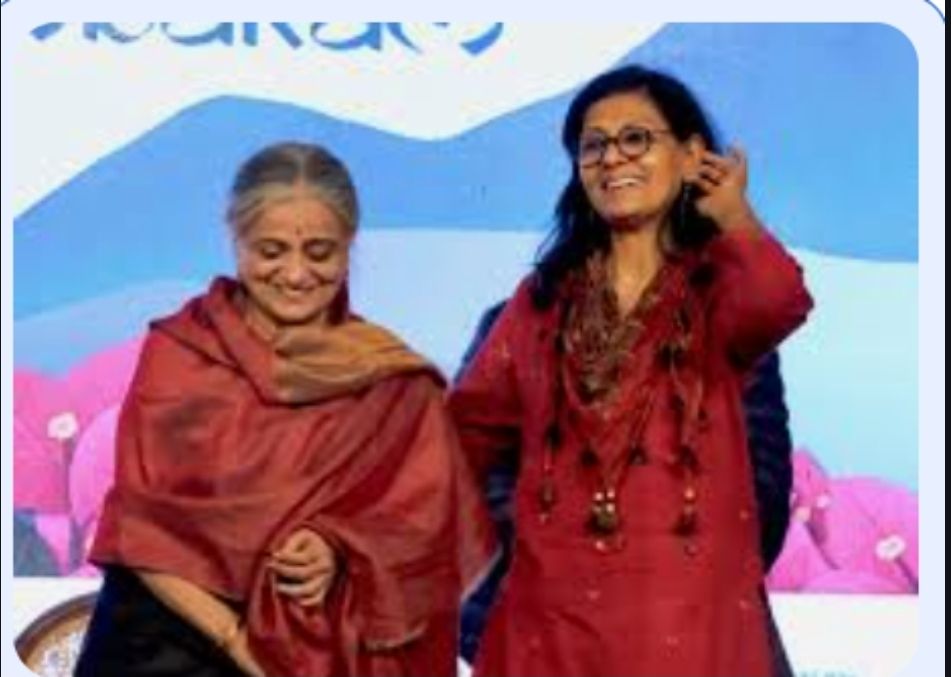
Also touching upon mass storytelling were doyennes Nandita Das and Bhavana Somaya, in the session, Alternative Act- Cinematic Storytelling with a Difference, where Das highlighted the struggles faced by independent cinema and filmmakers who prioritize authenticity. Somaya, illuminated how deeply cultural and traditional ideas infilterate mainstream storytelling. But it was talking to film-maker Leena Yadav, who made a path-breaking film, Parched, showing how the rural women of Rajasthan live through daily physical and emotional abuse at the hands of drunk husbands. Without an education, without family willing to take them back, “they are ready to be beaten up every single day,” Leena shared. One had seen this daily abuse – whip lashing, rape, humiliation – of the hapless women in her film in 75mm and not been able to sleep. I congratulated her for finding the resources and the people with whom she made the film. (She actually married her Director of Photography, Aseem Bajaj!) “The biggest shock for me was screening this film in countries like Sweden and Australia, where women told me this was happening to them very much in Western, urban societies. They were in the same sordid mess. They came up to me and confessed their daily realities as being identical.”
Leena has dodged many death threats from angry men from the communities in Rajasthan, who have felt exposed in all their chauvinism and cruelty.
A session I thoroughly found inspiring was, Education With Heart, Rethinking The Indian Classroom, which featured former Miss India, actress, parliamentarian and now educationist, Swaroop Sampat. “Children need to be allowed to assert their own points of view, not suppressed. Mostly, modern society is concerned with EQ and IQ. But here in India, we are in a position to guide their Dharmic Quotient and their Spiritual Quotient.
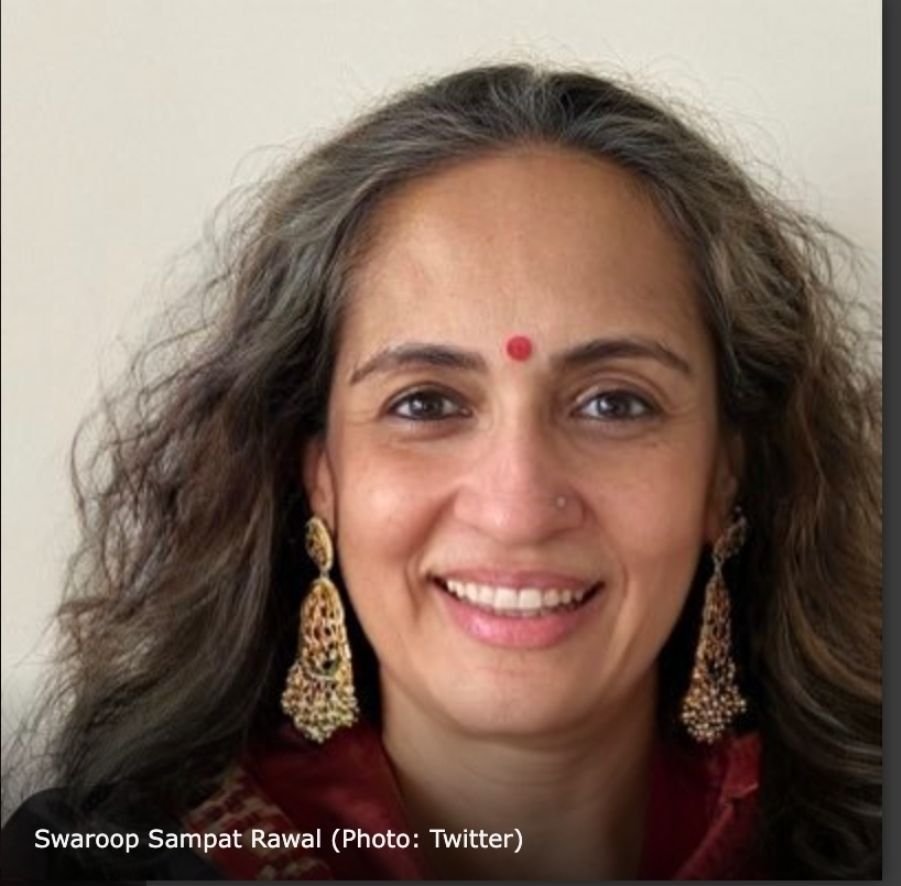
Especially in a time of AI, where machine intelligence will do the mundane data processing. I put it this way to our policy makers: ‘Let the classroom be a democracy, where the teacher is a guide, a mentor, but has the final authority like a Prime Minister.’” She got a warm round of applause for that, with a lot of students later sharing their fear of a jobless future given the reduction of jobs to AI.
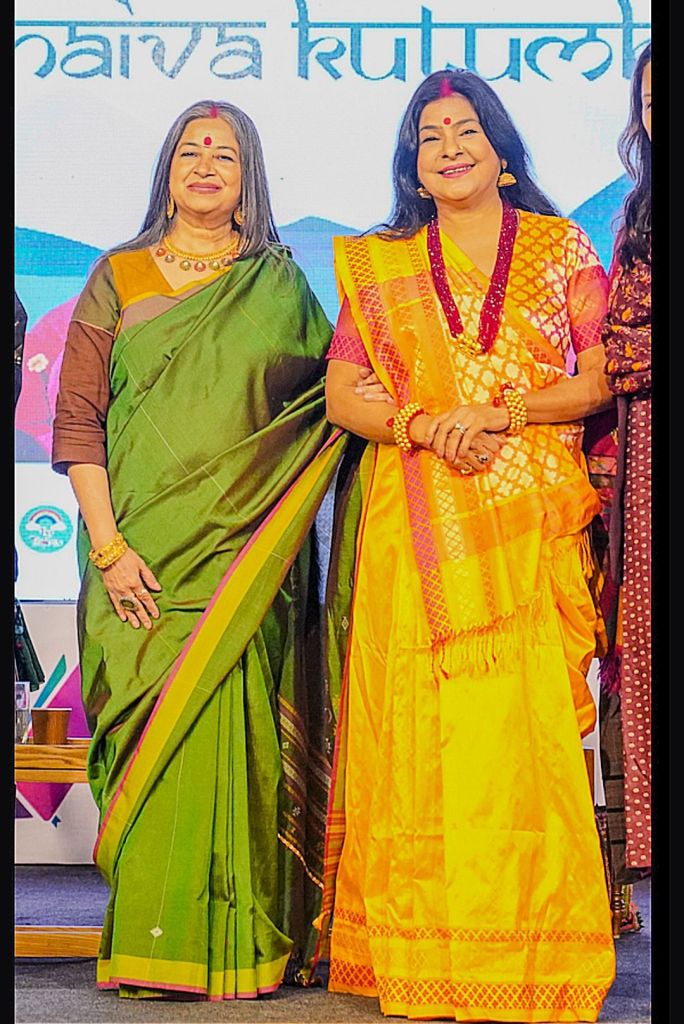
The session Ghao, Ghar, Ghaata featuring Malini Awasthy and Rekha Bhardwaj, proved to be a real eye-opener showing the debt our film composers owe to folk music. From the fiery Bidi Jalailein to the AR Rahman adapted Genda Phool. Even the rhythmic ‘kukukuku’ underlying the epic Choli Ke Peeche hit, echoed folksy ingenuity. This close-to-our-roots music is predominantly composed by women caught up in mundane tasks, working as a community, sharing stories, celebrating births, festivals, seasons. But to me, the most beautiful gesture by singer/composer Malini Awasthi, (author of Chandan Kiwad, on our folk musical traditions), was her special composition based on the legend of Sita, celebrating a daughter’s birth. “There was no song celebrating a girl child and in fact, families often hid the gender of the baby if they wanted to celebrate its birth!” she shares.
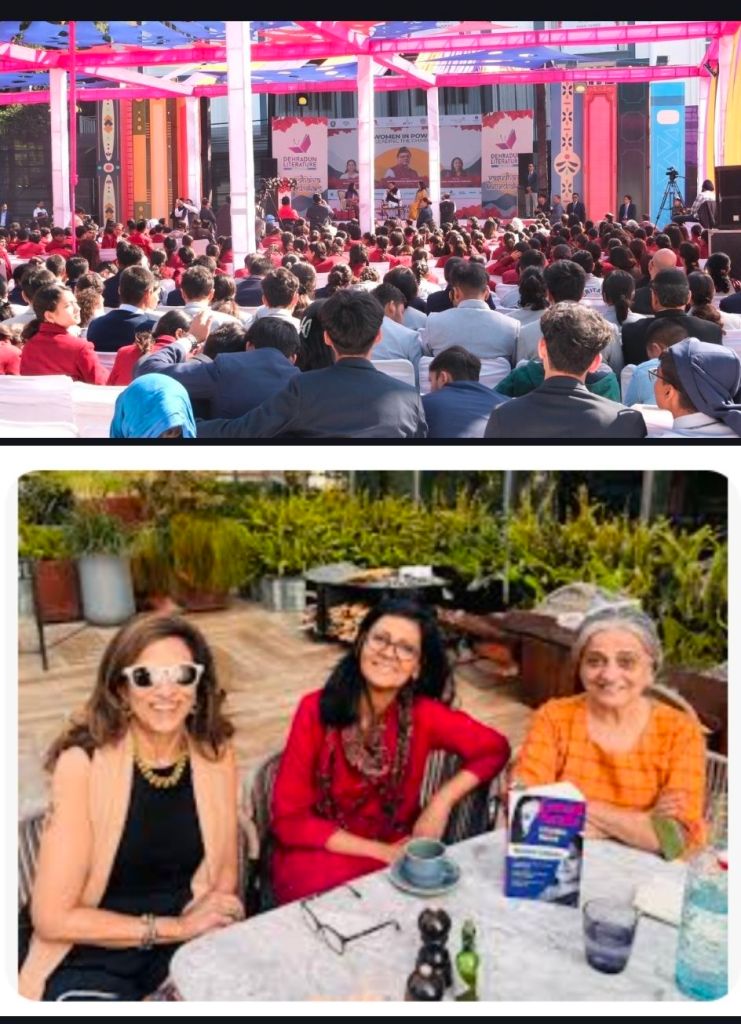
Of course, we had our roster of celebrated authors from Delhi and Mumbai. Shobhaa De held her own talking about her latest book The Sensual Self, where she rued how a rushed way of life had vritually obliterated the delicacies of romance and courtship.
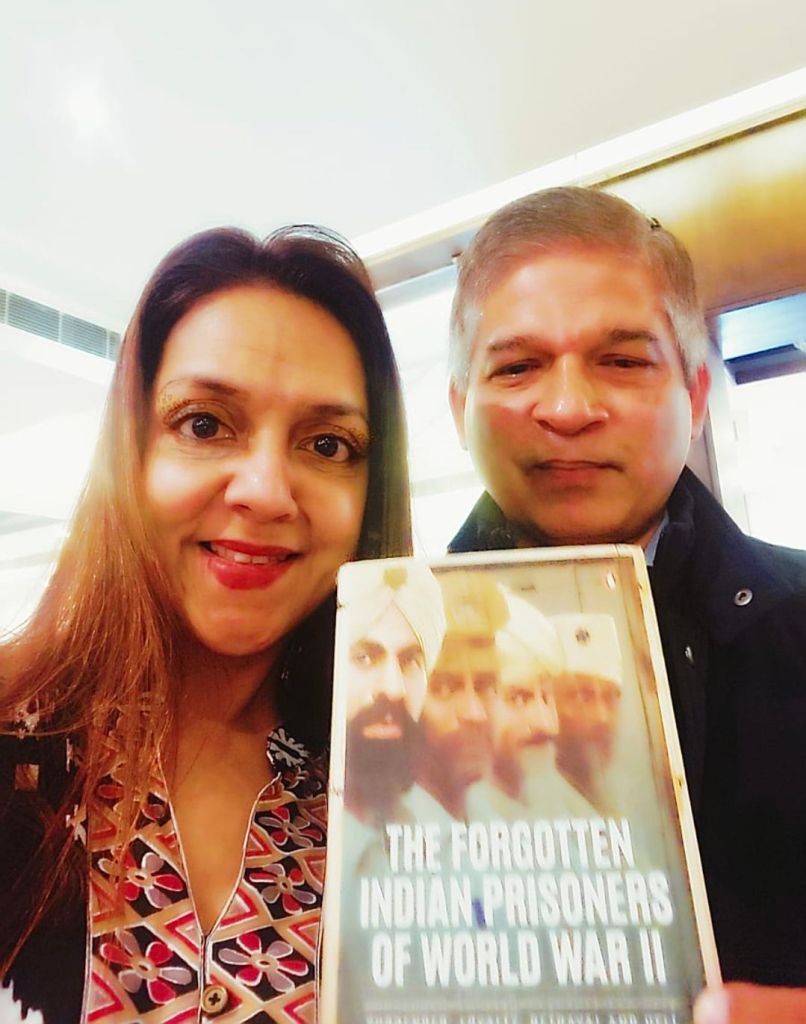
The Singapore-Delhi based Gautam Hazarika expanded on how he tracked down the lineage of the braveheart Sikh regiment that fought during WWII, based out of Singapore during the war. “Wherever we have launched this book, I have tried to have the voices of the descendents of these brave Sikhs soldiers, their children and grandchildren…and it becomes a very patriotic, emotional experience,” he shared in person, at the author’s lounge over dinner.
Beyond these highlights were many treasured insights, evenings of soulful musical performances and even on-campus stalls rich in offerings of handwoven sarees, woolen stoles, brocade pendants and brass jewels, incenses and home accessories, even paintings. The plum-hued sunsets and the notorious Paltan Market offered their own unique flavours to the Dehradun experience and we look forward to the Eight Edition, knowing there will be even more resonant voices and insights to look forward to!
Photos Courtesy: Dehradun Literature Festival


