

THE GLOSSED OVER, CLICHE-RIDDEN PORTRAYAL OF ROYAL INDIA CAME WITH THE OPTICS THAT GEN Z AND Y UNDERSTOOD – EVEN ENJOYED! BUT FOR A HELLO! MAGAZINE WRITER, WHO HAS COVERED EVERY MAJOR ROYAL FAMILY SAGA, BE IT UDAIPUR, JAIPUR, KISHANGARH, EVEN TALKING TO PRINCESS ESRA, FORMER WIFE TO THE LAST NIZAM…THE SHOW WAS HEAVILY FLAWED FOR A TOTAL LACK OF HISTORICAL AND EVEN CULTURAL GRAVITAS. SANGEETA WADDHWANI CALLS OUT THE MISSING LINKS!

Royal India and the world of cinema (and now, webseries), have been strange bedfellows.
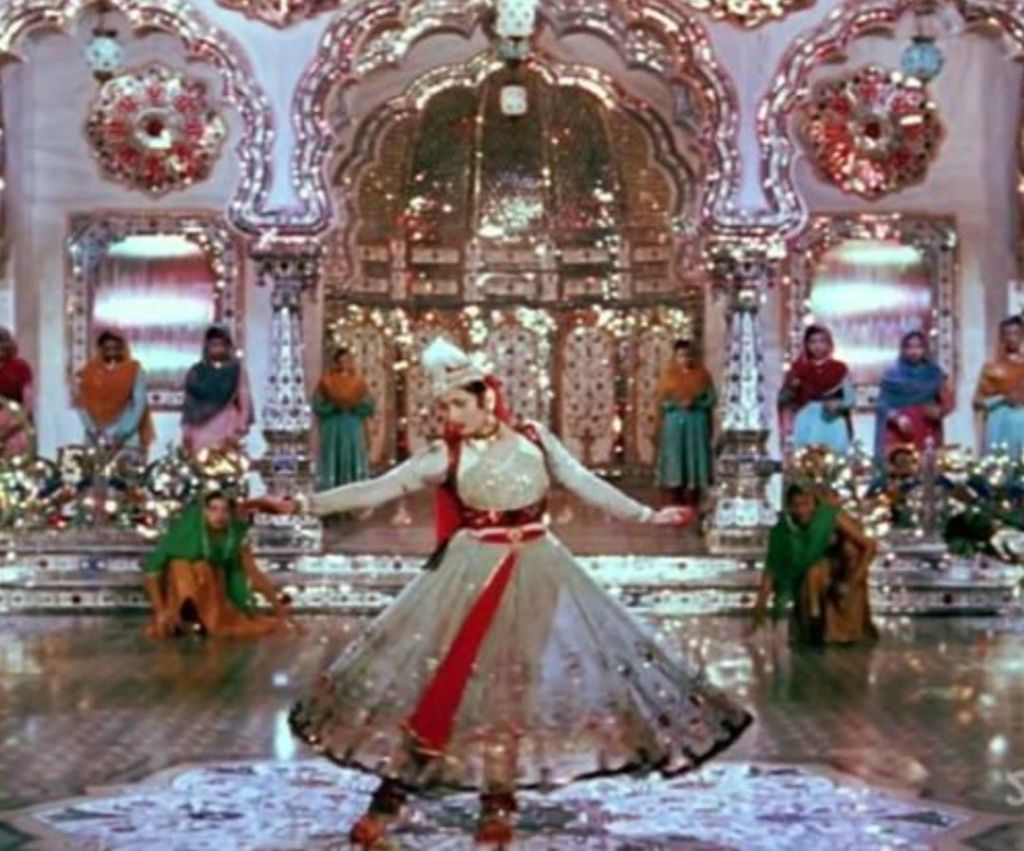
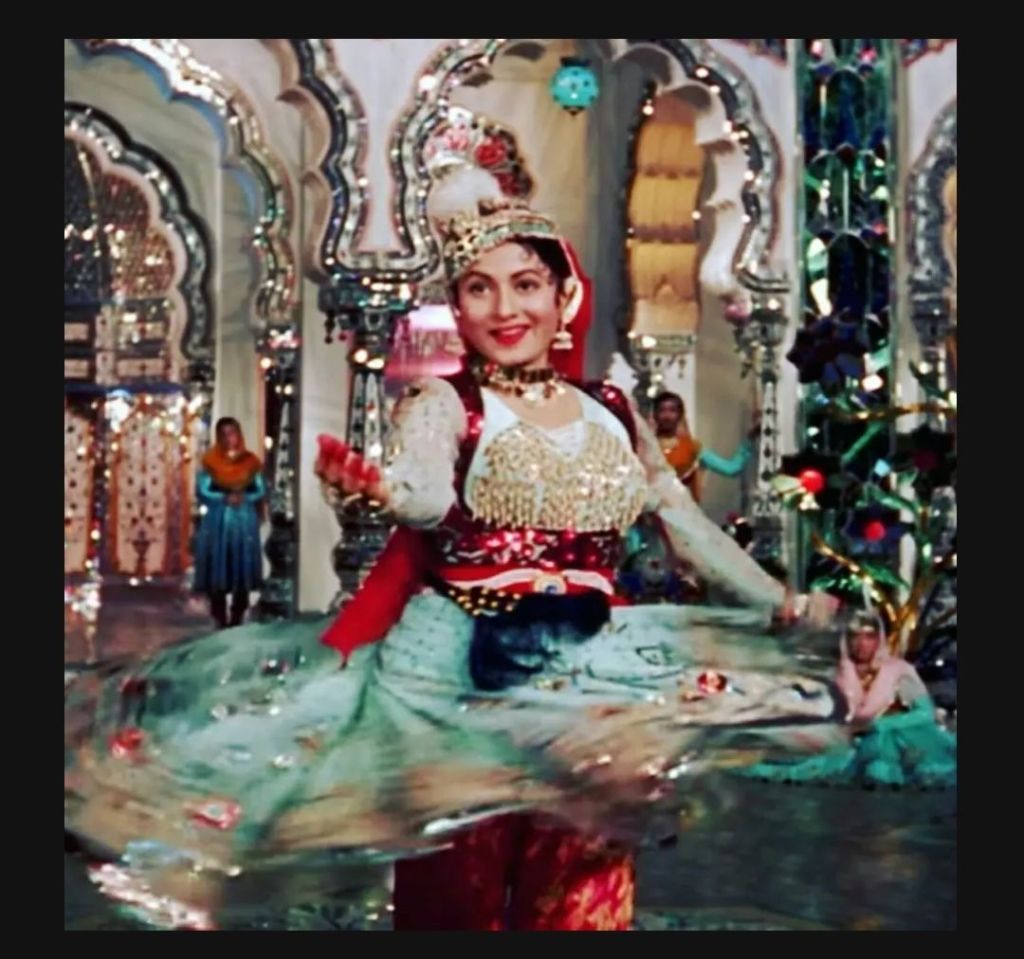
One of our most legendary films, Mughal-e-Azam, was hinged on the forbidden love between Anarkali, a courtesan, and Prince Salim, son to Emperor Akbar.
If the film took 16 years to make, it was because an artistic sensibility was seeking to draw the viewer into an alternative Universe, where love braved all odds, chivalrous officials would rather be burned alive while concealed in urns..than bring shame to their mistresses, whose husbands were turning on them with suspicion.
Mughal-e-Azam the film, created in 1960, harked back to an era where romance was married to human existence across multiple dimensions. Love played out in mirror- filled sheesh mahals, around fragrant lotus-filled fountains, or in covert meetings behind backlit latticed marble screens, or in richly manicured Mughal gardens under the stars. The stories were about the courting of emotions, not just lithe limbs and erotic ecscapades, to be forgotten.
Even films like Padmavat, Bhajirao Mastani, were visceral essays in portraying the grandeur of the war-decorated alpha Peshwas and the Rajputs.
Then fast forward to movies trying to visit the lives of royal families today. I laughed out loud…possibly the loudest in the PVR cinema hall, while watching Bhool Bhulaiyan 3.


The exaggerated depiction of a poverty-ridden former aristocratic family, was extreme to say the very least! The ghost buster character of Kartik Aryan is offered a dry roti with little else to slay his hunger, as a guest of the royal family looking to hire him to exorcise the underbelly of their massive, decrepit palace.
This, so they can sell it to the highest bidder in the hospitality space. They call it the Shahi Lunch, with one roti usually shared between 5 or 6 family members. The cow in the shed bately has any milk, being a starved bovine!
Modern cinema does have some memorable and less ‘Les Miserable’ visitations to our faded aristocratic mahals. One of my favourites while growing up in Taiwan, was the Rajesh Khanna-Hema Malini starrer, Mehbooba.


She and he were in love in a royal darbar where he was a court singer, and she was a courtesan. They could not be together in that life as he was partnered and she was untouchable in her position. But the depiction of them performing in that lifetime, especially the song Gori Teri Pehjaniyan…was so rich, we reproduced her dance performance for our Indian Independence Day celebrations!
Then of course we had Vidya Balan possessed by another heartbroken courtesan’s ghost in Bhool Bhoolaiyan 1. Again the depiction of rich classical dance by her to the resonant, timeless Aami Je Tomaar, evoked the cultural opulence of a time where love and art were married, figuratively, and the settings were grand and imbued with danger and valour.

THE ROYALS: A FACTIONAL LOOK!
Now let’s go to The Royals. The Netflix show which, to be fair, did show lavish production values, with many scenes shot at the Jaipur City Palace.
You have a Prince, Aviraaj Singh, highly reluctant to become Maharaja, owing to his late father’s repeatedly articulated angst about the weight of tradition that comes with a title. Aviraaj comes with a colourful romantic past, (commensurate with his status) despite a very broke and wavering present. The show has the Prince, played by Ishaan Khatter, assume a highly contrived Hamlet-like metre, with some Samson bare- bodied tadka thrown in.

Now while Ishaan himself has gone on record saying that he was asked to be bare torsoed, often gratuitously, the fact of the matter is, that kind of ‘thirst-trapping’ is not what royal Princes would ever be caught dead doing! Certainly not while representing and leading a royal polo match, in front of sporting legends and live media coverage!
This kind of pandering to the female gaze was never seen in our patriarchal royal societies, unless a gay or dandy maharaja (and there were a few of those) sought a ‘thirst-trapper’.
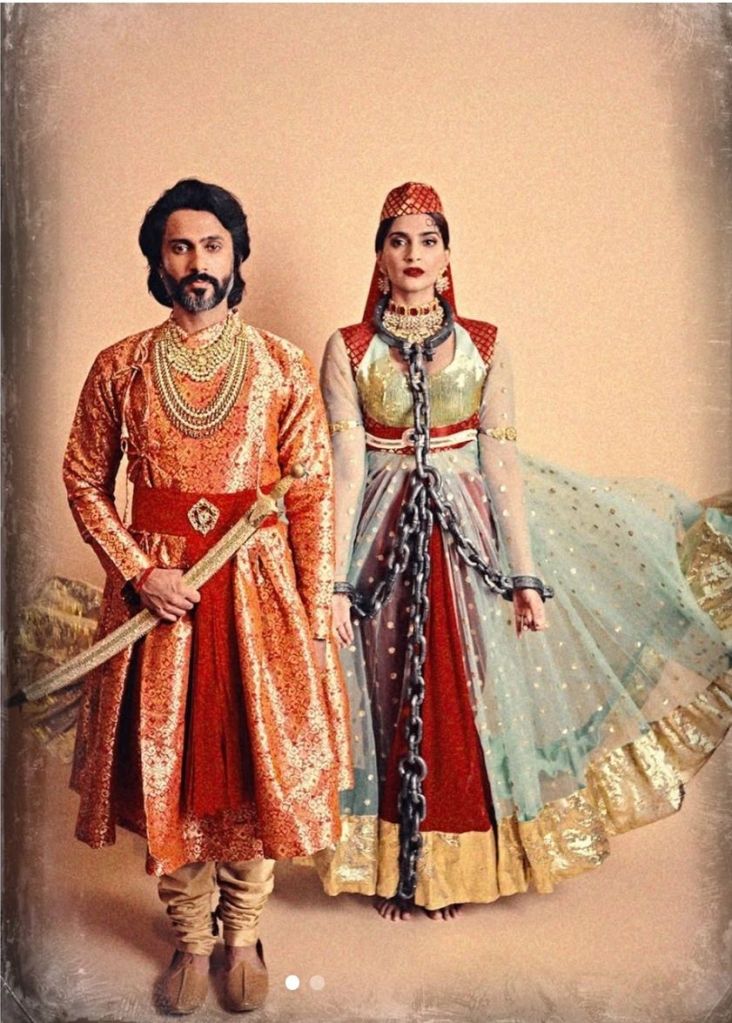
What else was causing allergies to those from the real royal universe? The cliches! A family where the Daadi (Zeenie baby) wears the standard pearls and silks, chiffons, as does the Rajmata, whose arsenal of jewels could start a bidding war….however, in hushed exchanges, we are shown that their leading concern is how to pay the electricity bill! Forget that! The entire family is portrayed in lavish Abu Sandeep attire, which my experience interviewing our royal ladies, contradicts.

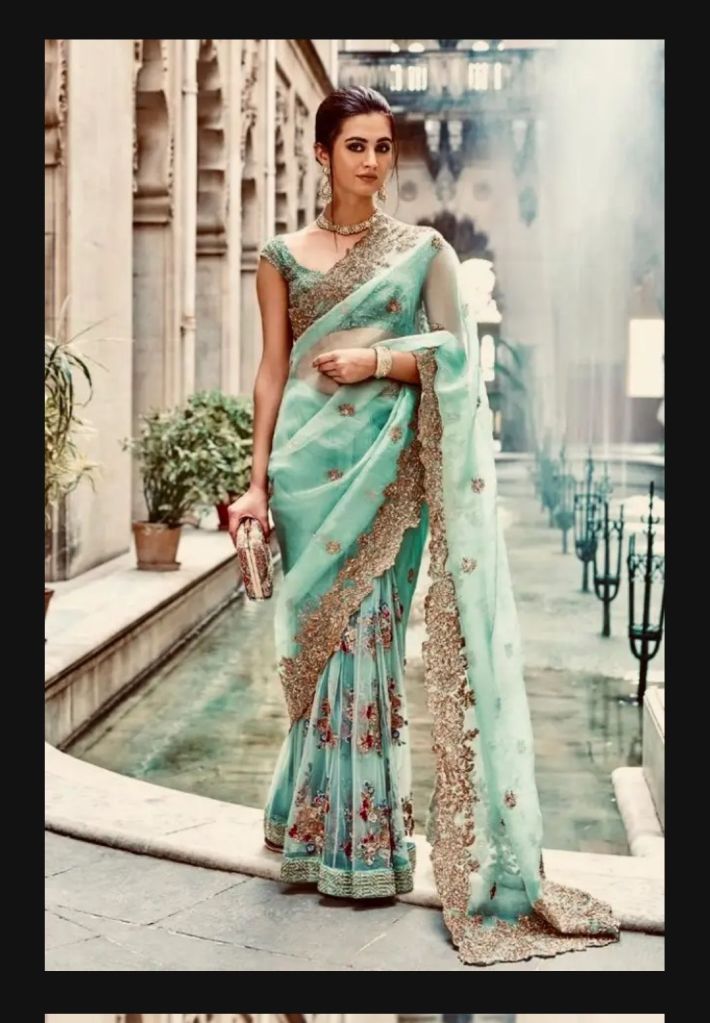
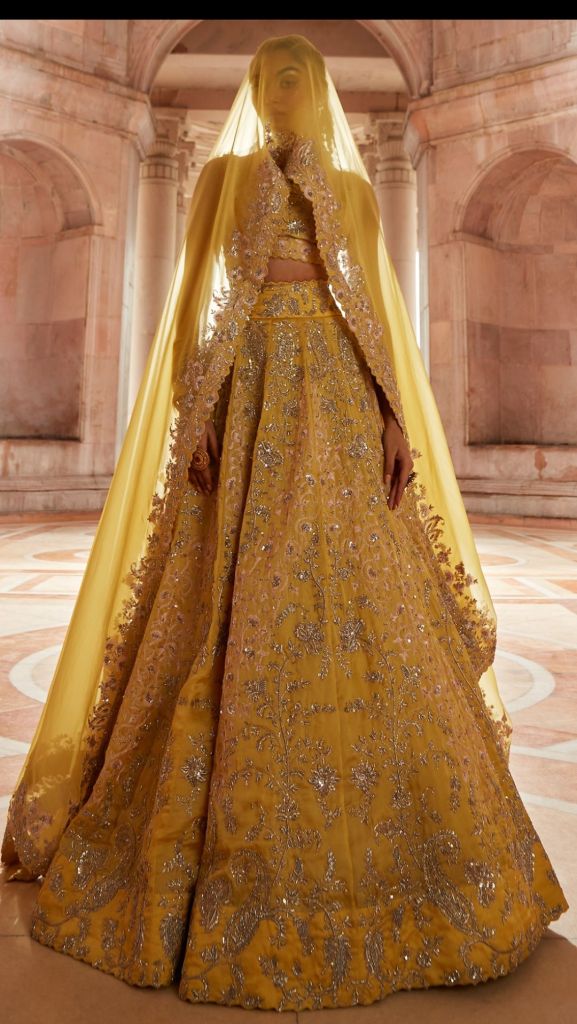
In states where temperatures rose to 50 degrees celsius, our Maharanis preferred light, airy chanderi weaves. A typical contemporary ‘couture’ saree or lehenga with 10 kilos worth of embellishments was often a compulsory evil for a bride…and often featured real gold threadwork. The princess bride was happy to wear it but for that one epic wedding night, and then (gratefully) pass it down to a daughter or daughter-in-law.
I came across these truths while meeting the royal women of Baroda (who are supporting chanderi weaves for today’s women)…and the bridal gold lehenga story, from Maharani Shailaja Katoch, wife to Maharaja Aishwarya Raj Katoch of the Kangra-Lambragaon royal family, in Himachal Pradesh, near Dharamsala. In fact, there was a display space and placard dedicated to this real gold bridal lehenga in the Sansar Chand Museum, but the family was afraid it would be stolen! So it remained empty.
By and large, royal families were busy. Uneasy were the heads that wore the Crown. They were heavily invested in defending territories, building forts and palaces, guarding their subject’s interests and leading civic and educational, cultural and spiritual initiatives. The larger and more influential the family, the greater the sense of responsibility embedded in their very DNA.
Even if a foreigner married into a royal Indian family, she was committed to preserving the architectural, spiritual, gastronomic, cultural and artistic mien of that dynasty.
Just look at the American Padma Shri decorated Shalini Devi Holkar who was once married to Richard Holkar of Maheshwar, a town ship in Indore, Madhya Pradesh.


She had a dream where her late mother-in-law Ahilya Devi Holkar asked her to support the native female weavers of Maheshwar. Sally did not dismiss that other-worldly wish, rolled up her sleeves and made it her life’s mission.
In 1978, she, with Richard, co-founded the REHWA Society and took the Maheshwari weave, global. That society not only encouraged the craft of handloom Maheshwari weaves, but also helped to foster other women weaver’s collectives, offering them a sustainable livelihood. She went on to found WomenWeave, and The Handloom School, which provides training in the weaving process, to keep it alive.

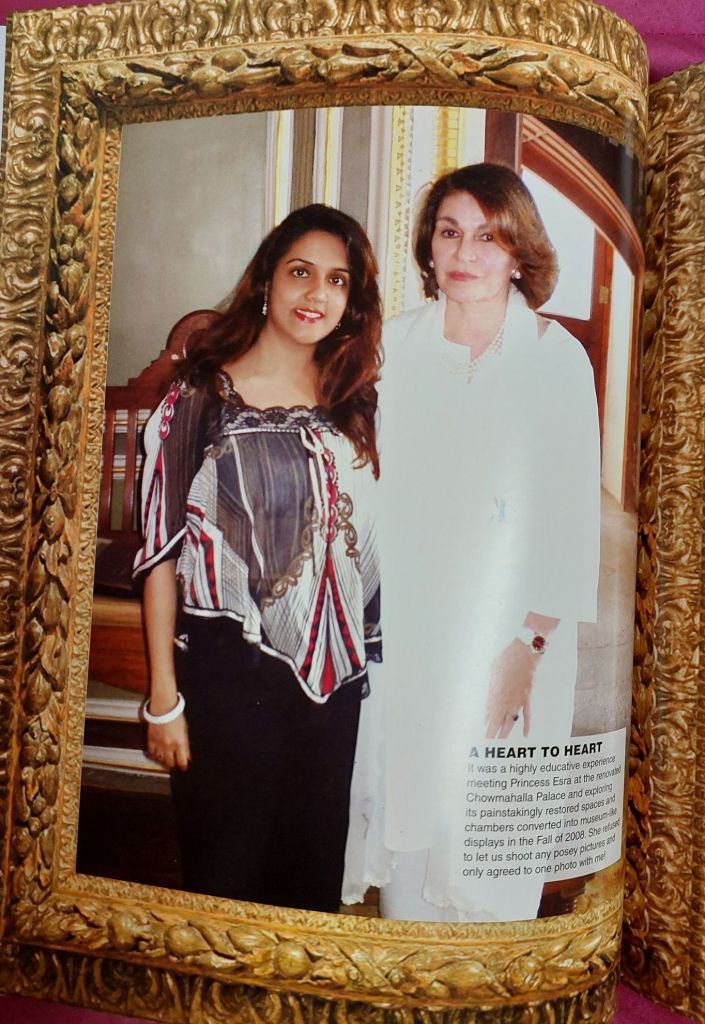
Take my experience with Princess Esra Jah, ex wife to the Last Nizam. Although they were divorced, he trusted his gracious Turkish former partner to be Executor of the Nizam’s estate…and she had dutifully restored the Chowmahallah Palace.
She did not agree to a new photoshoot around the restored property, agreeing only to one photo with the author of the exclusive…that was lucky me! (We did not feature the two of us..I was cropped out and we made a mug of the Princess from the photo). But at least we had one recent image to work with! The rest, she gave us gorgeous vintage photos.
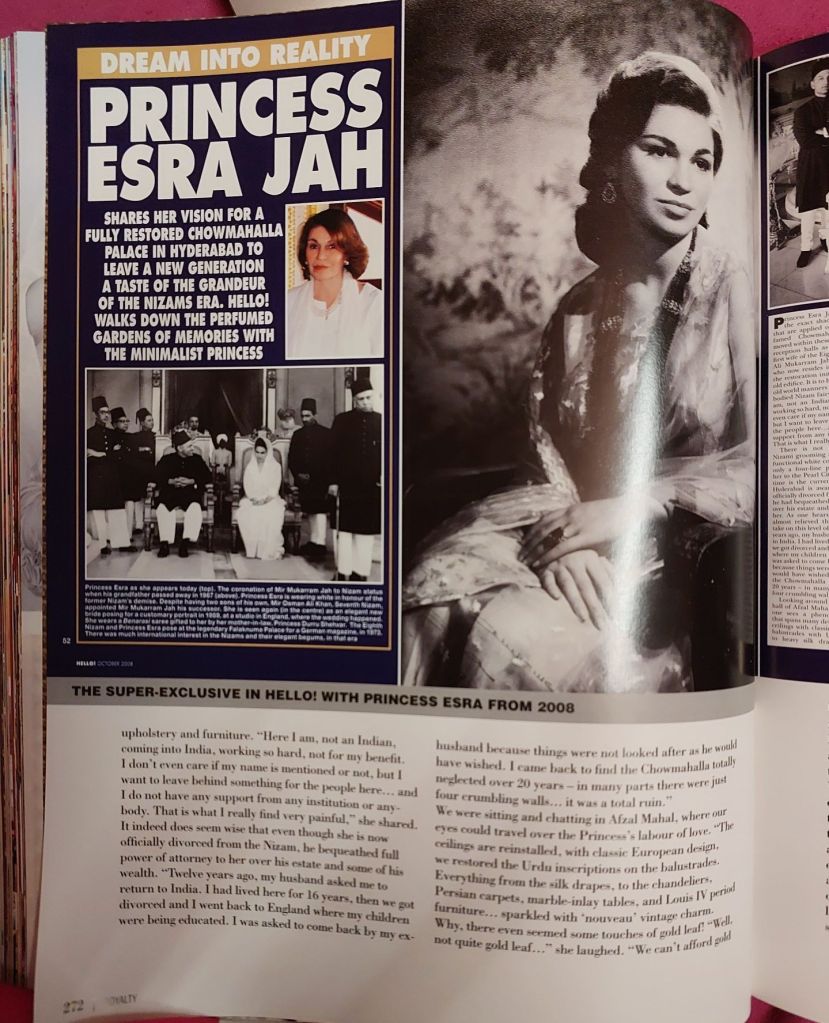
Princess Esra had devoted a considerable amount of time, family wealth and energy restoring chambers, chandeliers, furniture and recreating tableux of the lifestyles of the Nizams, (statues of royal ladies sitting with paan daans, etc) …evoking the magic of an era that had in 1937 hailed the Nizam of Hyderabad as the Richest Man on the Earth.
We had walked around the restored Chowmahallah, learning about how the Nizams created city landmarks..roads, hospitals, universities and schools, transport infrastructure, and so on. Hyderabad then had an economy the size of Belgium.
We read in Sam Dalyrmple’s book, Shattered Lands, that “After the fall of the Ottoman caliphate, the Nizam of Hyderabad was arguably the world’s foremost Muslim ruler a nd his capital the most prominent city of Muslim learning outside the Arab world.”
In 1937, as we know, TIME magazine named the Nizam of Hyderabad the Richest Man in the World and the 5th richest in all of history!
However, when I quizzed Princess Esra about what were her most powerful impressions of being a Nizam’s first wife, she surprisingly shared a “beggar” story!
Fundamentally on a hunting expedition, when they took a tea break, they felt compassionate for a destitute beggar. Offering him some tea and samosas, they were surprised to see him feeding a stray dog, a little later! His explanation? “Huzur, kutta bheek nahi maang sakta, mein maang sakta hoo.” To the Princess, that is an India she used to be moved by…the deep humanity in even the destitute population.
OUR ROYALS WERE DEVELOPERS, PROTECTORS OF THEIR PEOPLE
Yes, a few fiefdoms did have obscenely wealthy nawabs and maharajas hosting eccentric festivities…like weddings for their dogs! Take the Nawab of Junagadh who spent two crores on his dog, Roshanara’s wedding! Do read Javier Moro’s book Passion India, for more such stories! There were even Maharajas sending their concubines to Europe to get the top surgeons to reconstruct the shape of their breasts, to look like different fruits:)

But some, even the dandies, contributed to the arts in ways that have created entire schools of dance! Like the late Sitara Devi had shared with me, “Nawab Wajad Ali Khan Shah, was so committed to creating his school of Kathak, (katha means story)…he didn’t care that the British were appropriating his wealth or destroying his sovereignty!” Being a Nawab, a non Hindu, did not stop him from dedicating years and years to creating ballets modelled on Radha and Krishna!

In the final analysis, what The Royals did achieve, is a shallow but sexy portrayal of a torso-perfect playboy Prince who was looking to be as normal and unfettered by his blue crew…the extended family — racy Zeenie baby as grandma included.
In reality too, our Princes and Princesses have studied at prestigious American and British institutions, but rarely worried about rentals for their housing there!
Also, for the life of me, I can’t imagine why the Rajmata had to wait for her gay husband to pass away before she took her ma-in-law’s advice to have a life..i.e, give love affairs a shot. Does that even make an iota of sense? Also, a lady of that generation, in royal India, is more likely to worry about the family’s reputation than her daughter-in-law’s wasting libido!
The gay Maharaja who passes on, does leave our Hamletian Aviraj some interesting thoughts to ponder about individuality vs tradition..but the point is redundant with the Maharani anyways having her paramours, Aviraj turning down marriage with a rich bitch princess…whoa..why is tradition even a point of concern? 😂
One did also find it funny that the royal balls planned by Sophia (Bhoomi Padnekar’s) team, have poor rsvps because the royals don’t want to mingle with commoners. Excuse me, we have a politician princess who was wedded to a commoner, (Jaipur) and in an age where forget the arranged marriage, but marriage itself is so challenged…this was a complete misrepresentation!
One did like the way Aviraj and Sophia’s love is founded on her strengths…to bring the real world and the glorious royals into better alignment. One liked the way Aviraj tore up the contract on the Royal B & B when corporate politics were taking his real girlfriend apart. Bhoomi did manage a very convincing performance as a gritty, passionate pro whose popularity was throwing her bosses into beast mode.
There were pluses to the show…but waiting to see more webseries portraying royal families with a more believable, breathing storyline and less caricaturing of a class of families whose legacies still inspire awe.
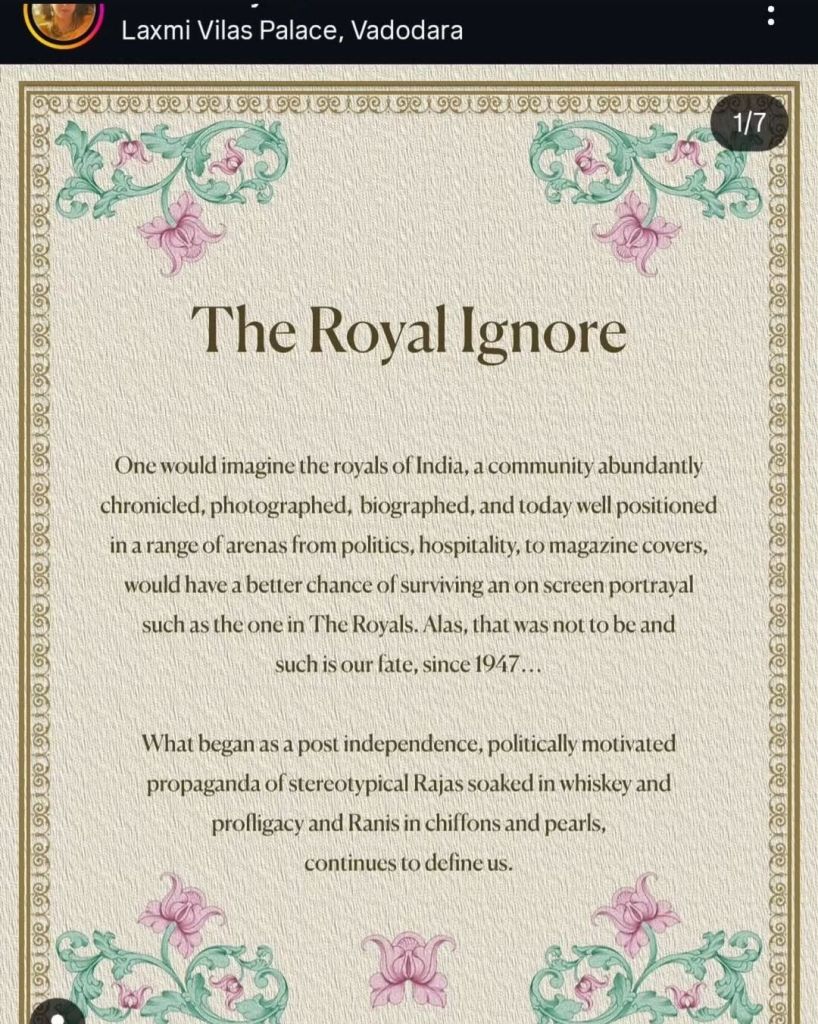
Maharani Radhikaraje of Baroda, was brave enough to call out the cliches!

 LIFE OF A MAGAZINE EDITOR
what a well written article and Sangeeta you are so right!
LikeLiked by 1 person
Thank you Shan!
LikeLike