THE JAIPUR JAMBOREE RETURNS!

AUTHOR AND BLOGGER SANGEETA WADDHWANI BRINGS YOU A RINGSIDE VIEW OF THIS YEAR’S HYBRID  JAIPUR LITERATURE FESTIVAL, WHICH BECAME A SPRING LITERARY SOLSTICE OF SORTS, SHOWING US A WARM CITY BLUSHING WITH HER FLORAL BLOOMS. ONCE AGAIN  THE HALLS RANG WITH VOICES ON WAR AND PEACE, HISTORICAL WOUNDS AND DISRUPTIVE FUTURES

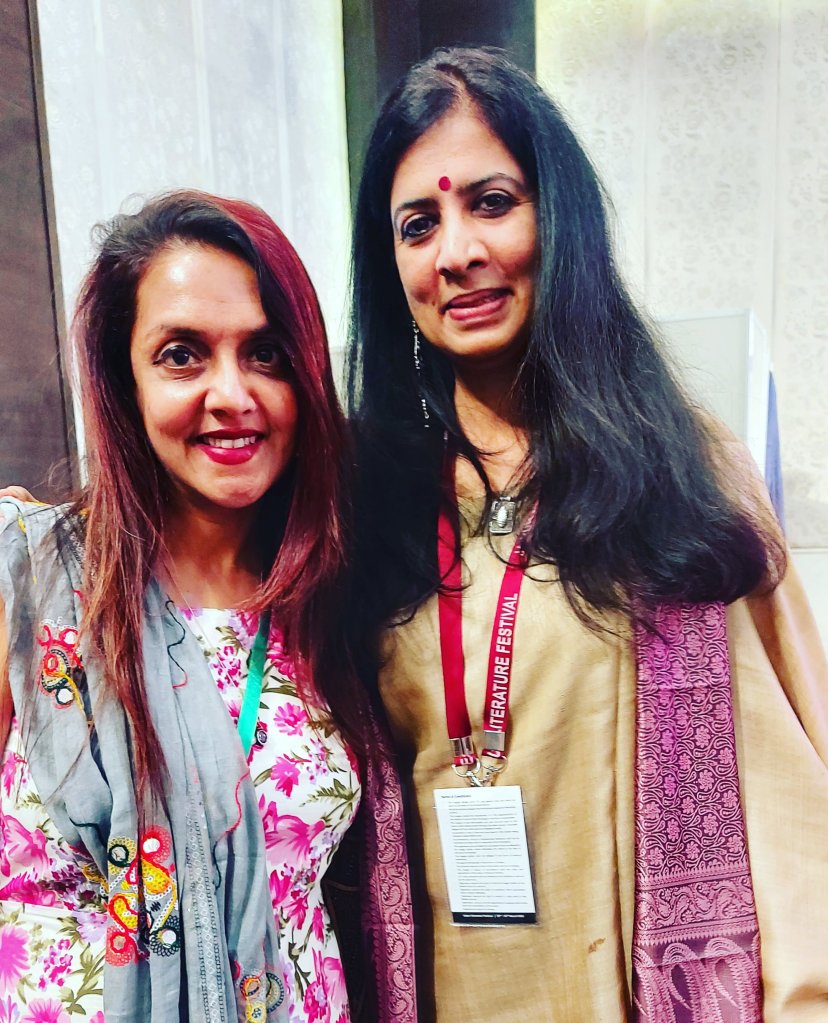
Colours, voices, handicrafts, laughter, applause and the signature JLF melody swarmed around as one entered Clark’s Amer for JLF 2022.. so what if the winter muses were not with us…after a hiatus of two years, it truly felt like a homecoming!

The 15th annual Jaipur Literature Festival opened on a note of luxury mixed with heritage, as it relocated to the lavish spaces around this hotel… a hop away from the Jaipur International Airport. Formerly, we only ever came here at night, to listen to an eclectic menu of bands at the Music Stage.

Lit Fests create a sense of family, as one earnest acolyte (my young friend Siddharth Kothari) who has been collecting author autographs and their contact information for two years, put it to me… and I totally concurred. Subconsciously, I had been yearning for two years for the JLF experience… to see a familiar face, have a fan moment, taste the local kachoris and dissolve into laughter at a witticism… preferably a Shashi Tharoor one!:)

There is a certain awakening of the collective consciousness at a great gathering of minds, where the burning issues of the moment are tossed on the fiery wok of opinions, insights, updates and multifarious perspectives ringing in from around the globe. I remember so often attending my first sessions at JLF in a state of jet-lag, as only 5.40am flights took off from Mumbai. Still, I would imagine toothpicks between my eyelids as I listened to Germaine Greer talk of the loopholes in the Bill Gates Foundation’s methodology of distributing condoms in red light districts…as her grassroots exposure showed that those condoms were not really being used by ‘customers.’  All those billions assigned to control the spread of AIDS… it was philantrophy in atrophy!

Discussions like these produced so many reality checks, that I always saw the Jaipur Literature Festival as a Global Open University of sorts. And a Fifth Estate of Democracy as it were – a platform for free expression, where every disturbing trend… from the fading out of print media, to a lack of tolerance for dissent in the Indian Parliament in recent times, to the shredding of preconcieved notions of history, geopolitics, racial and gender faultlines, came into laser focus, so that new insights and solutions might be born.  One of the most powerful sessions I attended this year, touched on the sensitive topic of India’s neutral stance in the Russia-Ukraine war, called The Changing Axis: India, South Asia and the World. The voice of Bruno Maces sounded like a modern Cassandra, as he warned, “India will sooner or later have to become an ally to the US. Russia is fighting a lone battle, and may reach a point where they can no longer manufacture weapons if their generators are attacked. They will be a global pariah and India will have nothing to gain, and everything to lose, if she still stands on neutral ground.”

From conversations to books; one would think  this 1,000 year-old medium of storytelling, has taken a serious bashing in the metaverse-infused reality we live in.  The Jaipur Literature Festival however, (even while it had Twitterverse contests earlier)  continues to champion a commodity that catered to pre-internet attention spans…. and to be honest, books will always be sacred to born communicators.  Even when they sit stocked up like dinosaur eggs next to one’s bedside, hoping to crack open and impregnate the mind of their owner!

What about e-books and audio books? They may be relevant outside a lit fest… but when at JLF… you are urged to run to the bookstore and grab your copy, queue up and meet the author for an autograph!  This is the joy of an offline format. We have this quote from a Times of India article of a JLF attendee back in 2012, sharing, “The fact that you get to meet the author in person and get books signed is fascinating and that can never happen with e-books. I met Fatima Bhutto which for me is an opportunity of a lifetime and I will remember the interaction with her all my life,” said Payal Bhalla, who came from Chandigarh to attend the festival.  Ditto my experience meeting a publishing legend, global President of Conde Nast, Nicholas Coleridge, who signed his glossy gold-jacketed biography, appropriately called The Glossy Years, making me smile when he wrote, “To a fellow magazine person” in my copy! This was in 2020, just before the Pandemic put a pause to lit fests.

There was a time the statistics for book sales at JLF were staggering: Individual authors sometimes sold 300 copies at a time, and where international authors went… books vanished off the shelves before many attendees could even see them! This is precisely why… JLF brings authors to life in a way that is almost intoxicating, so one forgets that one has little time to consume more content than the phone-delivered gigabytes in a day.

Another argument for an on-ground experience is, the response of a live audience itself can elevate your session, just like musicians thrive on live feedback in a concert. Back in 2009, audiences numbered about 1,000. By 2012, the entire city seemed to have lined up outside Diggi Palace to see Barkha Dutt talk to Oprah Winfrey! It was almost dangerous, the kind of stampede that could have happened as the festival didn’t filter out students or charge them… but every time the audience reacted, electrifying moments happened. Getting a mike to ask a question was a luck by chance thing too!

One has seen JLF go from infancy to adolesence, to full blown adulthood (possibly in that epic year 2012, where we saw luminaries like Ben Okri, Deepak Chopra, Oprah Winfrey and so many other global influencers take the stage). Then while this galloping trajectory only grew, with many Alice-in-wonderland offshoots like heritage nights, the music stage (which had such eclectic fare like Sufi pirs who came in from Pakistan and sang without microphones, or Faiz Ahmed Faiz and Kaifi Azmi’s poems performed by his daughter Shabana Azmi, or performances connected to William Dalyrmple’s book on the sacred performing arts of India, (called Nine Lives)… the Jaipur Literature Festival was such a holistic experience, it came to be called the Woodstock or the Kumbh of literature festivals.

But then, like a villain in a B-grade plot, you suddenly had the Gigantic Reset. The Pandemic. And all offline engagement became like the Original Sin. The fabric of word, conversation, debate, dialogue-baazi – were sucked into the vortex called Zoom. Or Clubhouse. The annual JLF jamboree adapted beautifully, and went on to touch 27 million literature lovers worldover in 2020-2021 – but the soul of a lit fest was missing. The thrill of rubbing shoulders with a Jeet Thayil, a Kiran Desai… of chatting with a passionate interpreter of classical dance like Sharon Lowen… of telling Chitra Banerjee Divakaruni that her book Mistress of Spices, made Indian spices volatile and sexy…. the MetaVerse did not make such informal interactions possible. And yet, it did make it possible to avoid unwieldy lines, stampedes and the stress of not finding a place to sit, stand or hyperventilate in a crowded session. (Yours truly hung from a tree trying to watch Barkha and Oprah!:)

This year’s JLF fell in line with Covid protocol, moving into a larger venue like Clarks Amer, and those student crowds were gone. There was an intimacy one had not felt in recent years, which made asking questions during sessions a breeze. Sure one missed the Greek, American, British, Armenian, Czech, Middle Eastern voices – that brilliant global presence which made a trek to Jaipur feel like you were going around the world, in a literary capacity, in four or five days. But as one of the Festival Directors William Dalyrmple said in an interview to ANI in the pressroom, which I overheard, “JLF 2022 has been a real deep dive into Indian history and culture.” The Scottish writer-historian, shared that they had four Nobel prize winners in this year’s line up, and ushered in Booker Prize winner Damon Galgut, Baillie Gifford, Patrick Radden Keefe and Sahitya Akademi Award winner Namita Gokhale, who is also a co-director of the festival. 

I did savour a voice from Lebanon,  Katherine Pangonis, author of the book, The Queens of Jerusalem. Who would have ever known the Middle Eastern women rose to formidable power during the Crusades, and some even chose not to marry so they would not loose their autonomy?   The author was at pains to point out that most historical narratives of that time came in through male perspectives, and she had to really dig deep into historical material to unearth a Queen-centric view.

There was a time JLF boasted of book sales touching 300 copies per author, (ten years ago)… but this time, I was surprised at the unavailability of Queens of Jerusalem post session, and also that the Full Circle bookstore had only two sets of Dalyrmple’s Company Quartet!  The author is truly an authority on the Last Mughal, the White Mughals (it was fascinating when he did a slide show showing the transformation of white officers into sahibs, smoking their hookah and wearing Mughal vetements.)  Equally, he and Shashi Tharoor had a lot of common ground when discussing the evil East India company, and what it did to a thriving and industrious India. The Mughals actually were terrible, barbaric, attacking Vrindavana, raping women, destroying temples. But India ranked high on global GDP because her produce – textiles, art, spices, precious stones – were much coveted worldover.  The East India company was decoded by Dalyrmple in his slides too – a five-window grey drudgery of a building in London that only employed 35 people, and maybe 250 odd officers in India – bled the country dry of its identity, self-pride, and shredded her economic supremacy.

Out of sentiment, I took a little time off to visit a lifestyle pop-up at the Diggi Palace, the erstwhile ‘home’ of JLF. The spare corridor leading into the palace, surprised me. I have never seen Diggi without the spirit of JLF… and here it was… looking lifeless on its fringes, compared to the frenzy and colour of past years. That magic had been transported to Clarks Amer. In time one realises that JLF carries its own fiercely positive spirit into any space it manifests in. It is magical. And while Zoom as a tech platform can enable a far more easy-to-fund JLF, bringing international voices into a hall over a screen, one still hopes it will grow back to being a global melting pot of ideas in real time and space.

Meanwhile, I truly congratulate Sanjoy Roy of Teamwork Arts for a spectacular resurrection of JLF, and all the festival directors for their love of the written and spoken word. Remember ‘vac’ or speech is a gift of the Goddess Saraswati and carries immense power. Books read in isolation and books discussed in a session speak to us in different ways. The important thing is that we continue to tune in. A new edition of JLF is going to be the ultimate integration of mind, body and spirit, at Soneva Fushi this May.  Looking forward to that experience!

GANGUBAI: A FEMINISM OF TRAPPED WOMEN

SHE IS BOTH GODDESS AND BITCH, VICTIM AND VICTOR, SOCIETAL VENOM AND VENUS.. PRESIDING OVER HER DUBIOUS BUT HEARTY QUEENDOM. SANGEETA WADDHWANI RESPONDS TO A PREDICTABLE PLOT RENDERED WITH REFRESHING FIDELITY

The Bhagavad Gita says that when a soul is embodied and has to then feed that body, that itself makes the human condition ashubh (inauspicious). We all become creatures subject to the law of give and take, the civilized warfare of ‘business, ‘ swimming in a river of transactions. Western existentialist philosophy too looks at this business of surviving, negotiating the Godless Universe with only ‘the Greater Common Good’  as a moral compass…as part of the Human Condition.

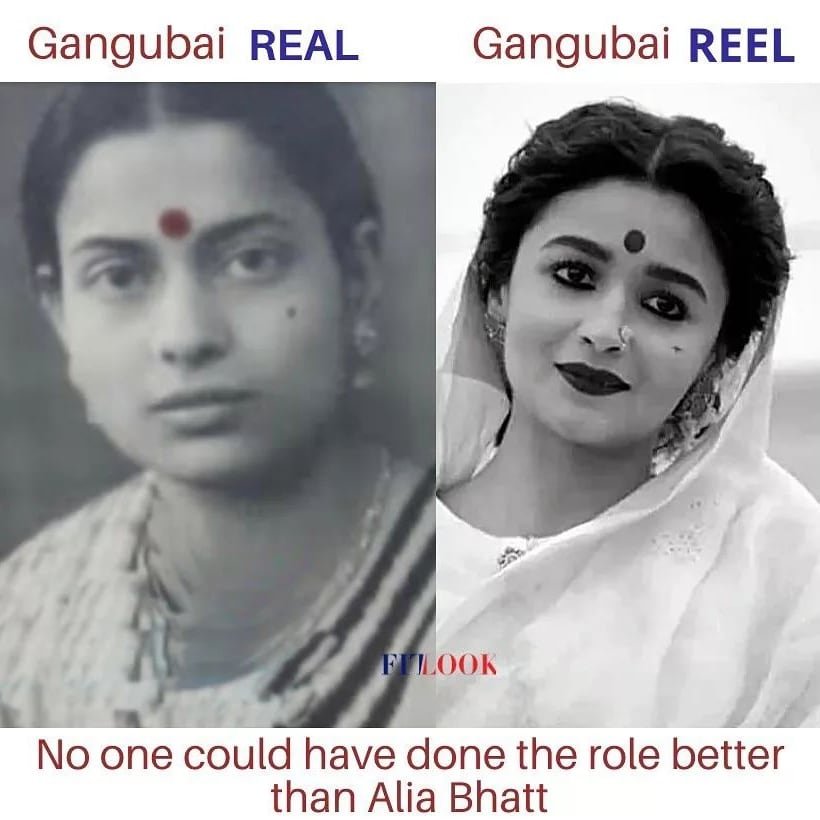
Gangubhai is a true story recorded in investigative journalist S Hussain Zaidi’s book, co-written with Jean Borges, titled The Mafia Queens of Mumbai. And as one would expect, it traces the journey of a 16-year-old minor, from Kathiawad, Gujarat, who elopes with her family accountant (who lures her to Bombay promising her a role in a Dev Anand film) but dumps her in Kamathipura, for the princely sum of Rs 500 (in the book…in the film it is Rs 1000).

Ganga becomes Gangu by her own volition, once she is violated and sees that this world has no real escape. Her respected family, filled with lawyers,  has other daughters to marry off…

What the book says is that once she adopts the life of a sex worker  Gangu actually becomes so good at her ‘job’ that she is the most in-demand prostitute in her brothel. There is, however, a devilish Pathan client whose horrific abuse – unchallenged by the Madam of the brothel for fear of the police – leads her to seek revenge…and that is the turning point of her hapless situation.

Gangu boldly goes where no prostitute ever has…meets Kareem Lala who heads the Pathan gang and shows him the terrible wounds inflicted by his henchman, that had her reduced to an invalid in a hospital, disfigured, broken physically and emotionally numb. She tells him how the animal left her uncompensated despite violent rape episodes. Kareem lowers his head seeing the cruel scarring of her fragile body and a platonic brother sister bond between this Lamington Road Don and the born-to-lead Gangu, powers her already spirited journey.

Right there we see an ever stronger young woman who can no longer be controlled by the Madam. And who seeks a life of some respect, recognition and even legitimate frameworks for sex workers condemned to be outcasts even though the most powerful Seths, power brokers and underworld dons frequent Kamathipura.

How this young woman travels in her first train ride from a respectable Kathiawad family to the urban Hades of Kamathipura, and then years later, boards another train from Kamathipura to the PM’s office, as an elected President of Kamathipura,  carrying within her a mission to find justice for the 4000 prostitutes under her charge …this is the brilliant trajectory of Gangubai.

But what makes this a highly resonant film? At the thespian level, Alia Bhatt. Many who have seen trailers of the film denounced a young Alia’s suitability for a role of a hardened, insouciant, warrior of a woman steeped in underworld ways of seeing and being.  What they don’t see is that Gangubhai’s own journey started at age 16 and she rose to power while still in her 20s, mid-20s…her triumphant years occurring in her early 30s. This makes Alia’s youth in consonance with the character.

Second, Sanjay Leela Bhansali is known to elicit pure magic from actors, throwing them into the Universe they need to inhabit, letting them become one with it. Ranveer had shared with me how he had isolated himself for a year from people, living in an apartment in Film City when getting into the evil psychology of Allaudin Khilji. So dark was that time for a man of Ranveer’s usual light disposition  that he even felt he saw Alaudin’s shadow once on the set! And even when we spoke of Allaudin the vanity van lights started to go on and off and the van started to shake, earthquake style …his immersion took over even our interview moments!

Alia who has led a fairly sheltered life as daughter to Mahesh Bhatt and Soni Razdan, has only ever tackled heavier and grimmer realities through the characters she has played. Remember Veera in Highway? Mary Jane in Udta Punjab?

Gangu’s pain IS her power. So much so, even when a chocolate boy (her tailor’s son) crushes on her, she plays with him as with a toy, not seeming capable of a vanilla love story any longer. The realist in her gets him to do the noble thing and marry a prostitute’s daughter…bringing for the first time a legitimate baarat through the infamous gallis of Kamathipura…and through her veil of unseen tears, we slowly understand that she truly has her family’s legal genes…she is a lawyer in her DNA…a justice seeker who will trample on her own happiness to improve the lot of women denounced by a world that buys their bodies and discards them.

The dialogues in certain scenes may well become iconic…the concluding lines if I remember them correctly…”Hassi unke kismat mein nahin..rona unke fitrat mein nahin..” (laughter was not in her fate and crying was not in her spirit)…and also her near poetic utterances to the Pradhan Mantri…urging him to legalise prostitution after he promises to Institute a committee to keep Kamathipura as their undisputed home…the richness of her last four insights when leaving the PM’s office, leave you wanting to run to Google translator to understand every nuanced meaning…!

Off camera, in many of her press interviews, one sees Alia explaining that her true strength as an actor is her ability to empathise with a character. In this role we do see how soft-faces can come with toughened eyes…and “the feminine power hidden in the folds of a saree can be deceiving,” as Hussain’s book tells us.

Alia’s character and Bhansali’s narrative are both augmented by talented screenplay writers… There is insight, humour, and a devil-may-care attitude in all the words she spews…her dimples firing their own missives. She is both Goddess and Superbitch, Victim and Victor, Venom and Antidote…in her dubious Queendom.

And it is all conveyed to us as energy.

Throughout the film, Gangubai’s eyes, often in extreme close-up, exude pain laced with power. When a character’s arc is so laden with a destroyed past, vulnerability, a forced and fallen identity, then an intense bid to survive and reinvent, to bury deep within, a betrayal of a first love for paltry profit, to then continue to sacrifice personal safety for justice… to build community and speak for voiceless and commoditised women.. through it all Alia’s eyes, body language and attitude, are in character.

One point Gangubai should have raised when giving a bhashan at a public political rally, when explaining how prostitution is the world’s oldest profession, and how male lust has spilled beyond the sexual cage of monogamy for centuries, often sparing their wives from perversions, abuse…if I was a screenplay writer, I would have also added that there are many levels of prostitution, which go unnoticed. Actresses sleeping around for opportunities..treated like goddesses once they succeed? Professionals in advertising sleeping around with producers for debuts as models or even to get directorial opportunities? Nobody condems that kind of transaction…but the Kamathipura prostitute is always spat on…though she is honest in her transactions. In Gangubai’s eyes, prostitutes are hafta-paying, rent-paying, police palm greasing, law abiding participants in the urban trellis of give and take….

On a parting note, I remember interviewing Soni Razdan, Alia’s mother, for VERVE magazine many years ago. Soni had a deep sense of regret for having married, as she felt a woman then makes her life all about good wifehood and often sacrifices and even buries the artiste within. “The film industry stopped approaching me as an actress, they worried about me being the powerful Mahesh Bhatt’s wife…saying who would dare ask her to act now?” Her generational dynamic still saw the movies as an exploitative industry, dictated by the Male Gaze. Not a clean place for wives of powerful men! After watching Alia as Gangubhai…forget the sold out First Day, First Show – I reckon mama Razdan must be thrilled to see her daughter taking her abandoned dreams to soul searing levels of excellence. While KJo may have exposed Alia’s blissfull ignorance of political figures, nobody can deny her mastery of character, dialogue delivery and command over the camera as an artiste.

It’s the Era of Heroines over Heros.

Would Ranbir ..the entitled and talented husband-to-be agree?

AHMEDABAD AHOY AND THE IDEA OF ‘META MAYA’!

FROM A DUSTY TEXTILE AND DYE MANUFACTURING TOWN TO A MALL AND BUSINESS HOTEL-FILLED CITY THAT SHOWS SOUL WHEN NURTURING ARTISTIC TALENT…AHMEDABAD’S PEOPLE, CUSINE, HERITAGE STRUCTURES AND STREET MARKETS (OPEN BEYOND 10PM) PROVE TO BE DELIGHTFUL, SAYS SANGEETA WADDHWANI

So many inhabitants of Mumbai and Delhi consider other metros to be in some way substandard when it comes to the quality of living. This myth is getting challenged each year. A recent trip to Ahmedabad offered a portrait of a city that once smelled of toxic textile dyes…(I remember a terrible attack of hay fever and an earthquake on my first visit in 1994)…now transformed into a commercial, ticking hub dotted with Novotel and YMCA International hotels, a mall of some scale virtually in every neighbourhood…and an art scene not driven by the commercial ethos and insularity that presides over Mumbai.

So very heartening!

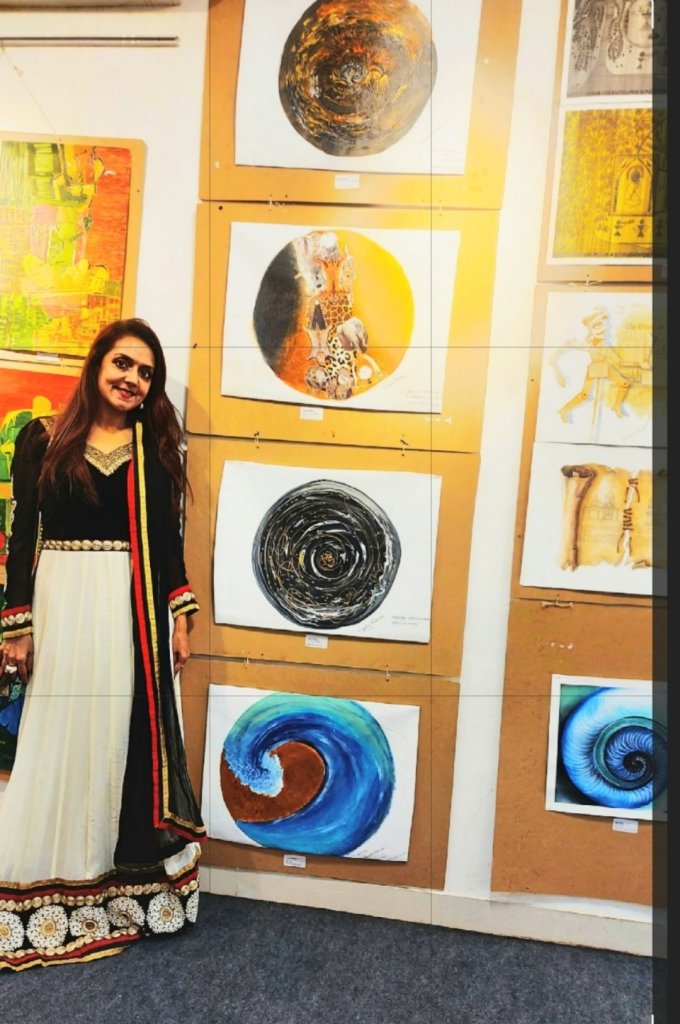
Hon Manahar Kapadia Ravindre Mardia and myself standing near my artworks…ORBITS OF REALITY
A sweeping view of energetic art at ICAC
A myriad styles of creating art were evident
The inaugural ceremony
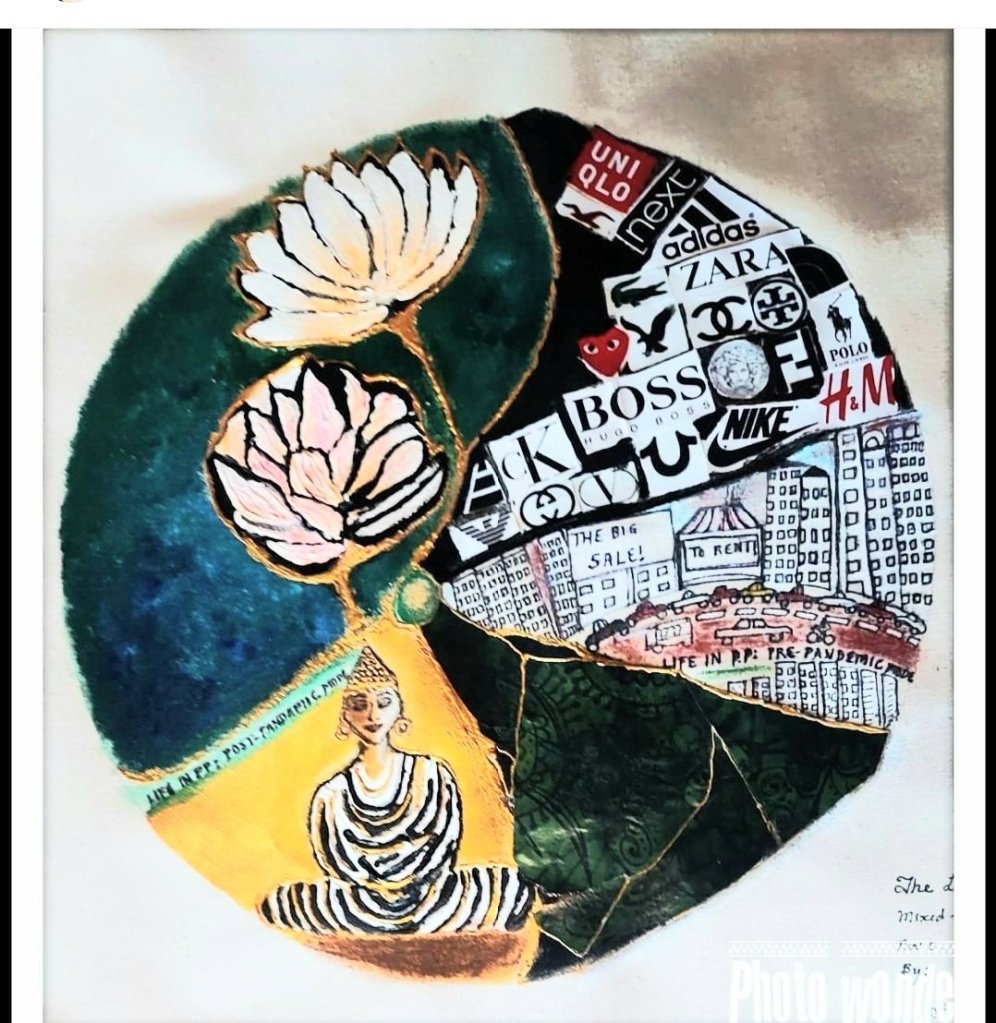
The LOTUS CONSCIOUSNESS, a work showing how subtly we have moved away from materialism to nature post- Pandemic

Yours truly was there to attend the third installment of a series of showcases of art entries for a nationwide competition and art exchange program hosted by the ICAC (Art Gallery. The man who conceived of this idea was Ravindre Mardia, President of ICAC, who couriered art paper and canvas (depending on the artist’s choice) to every participant. “We had 415 artists participating, and received a total of 1,684 artworks, from more than 100 cities from India & abroad,” shares Ravindre.

The diversity of styles, techniques used, and nouveau visual languages, was a treat to witness when we walked around ICAC on the opening of the third show for the competition.  Little wonder, when you consider that participants were not only from North, South, East and West India (from Gwalior to Guwahati, Jhansi to Junagadh, Kolkata to Kerala) but also slick global hotspots like Singapore, Dubai, the US, Bangladesh, Nepal, Sri Lanka, Spain and Hong Kong,”

Ravindra has a history of being in business as a manufacturer of metal goods, but has chosen post retirement, to nurture artistic talent in India. Just engaging with artists from such diverse geographic and cultural backgrounds in an age of online showcases and NFTs, is laudable. “Artists are often dealing with the pressures of full time jobs but with Pandemic disruptions and lockdowns, they were in a better place to create new art by hand, and hence we chose to have this contest,” he shares.

Ravindre and I had first met at the 10,000 square feet artspace called The Art Hub which he presided over, at the Atria Mall many years ago. Here, I was contemplating hosting my Coho Bohemia Bombay artwalk  as it was all about mixing a visual art experience with other art expressions..music, dance, poetry, prose presentations, theatre, short films, etc. I also secretly wished to showcase my Swarovski Divinity paintings there! Somehow this didn’t come to pass.

But here I was, many years later, part of Ravindre’s generous curation and vision in Ahmedabad…meeting his friend Hon Manahar Kapadia, IC Principal of the CN College of Fine Art, Ahmedabad, who opened the show. There was something pure and minimalist about the evening. Punctual. No wine (but nice cutting chai). No VIP marching in at a hefty price with an entourage, no paparazzi and no tamasha! Just reveling in art for arts sake.

Ravindre and I chatted about the decline of interest in art through the last two years, in Mumbai. One saw barely a trickle of art lovers attending show openings and “I see most people only visiting Jehangir Art Gallery for shows,” he shared. I ask him what he feels about the NFT-isation of art! And show him ‘iconic’ NFTS like the BoredApe, which has been traded like hot stock for millions, even when one sees no artistic value in the lame digital image. Even Warhol’s Campbell Soup on a loop made some kind of statement about American life!

Ravindre seems blissfully out of the NFT art “business’ so far though he shares, “Yes artists are wondering about earning well in this trade, but how many NFTs actually become so popular on the block chain?”

It reminds me of the many Indian artists of top stature who I had interviewed for L’OFFICIEL when digital art interfaces had become popular. MF Husain had felt that working with a mouse and digital palette and digital brush “did not feel painterly.” Suhas Awchat, Jaideep Mehrotra were just a few of this First Gen of artists expressing their ideas with digital interfaces.

Today one sees a parallel art scene that serves only a digital viewership where artists may never NEED to touch art materials or ever interact directly with galleries or buyers. Their ‘patrons’ simply click digital buttons and become token holders (joint stakeholders) of an NFT or pay a lot more and buy into its copyright! (We are talking upto 25 lakhs for copyright ownership!)

But where is the joy of carrying a physical work home…finding a place for it…gazing at it with different friends and family, across generations? Where is the spontaneous and messy experience of smearing colour and material around a work…clicking a mouse and dragging the cursor from a digital palette circle…to see what colours you are getting on a screen..it’s just way too clinical!

How do you feel about this digitization of art? At least at ICAC this dystopian form of art creation..or to be more with it NFT-isation and trading of digital imagery…seemed to be on the fringes of things. When Saraswati can manifest without the overt pursuit of Laxmi …it is said Laxmi gets jealous and starts to arrive at an artists doorstep!

Time will tell whether NFTS are just a bubble or will persist. Strange are the fallouts of the Great Digital Takeover of our world, Non Fungible Token did you say? But of course, fungus only collects on real time matter! Here’s to a non fungible formula for everything then…intelligence, relationships, ecosystems, societies community…for I believe there are people who live entirely in the Metaverse..inhabit cities there… drive, date people, transact, love and loose..

We in India had a word for it centuries ago…MAYA. Meta Maya? Sounds like a deal embraced by a crazy new world!

Sangeeta wears a skirt found in the Law Garden market at the spectacular Adalaj Stepwell

“WE QUIT!” THE GREAT RESIGNATION DECODED

SANGEETA WADDHWANI EXPLORES WHY SMALL AND MEDIUM ENTERPRISES – EVEN TRADITIONAL CORPORATIONS – ARE BEING ASKED TO EVOLVE, REVIEW THEIR ATTITUDES AND STRUCTURES… OR RUN AN EMPTY SHIP!

The Great Resignation.

The destabilisation of evil bosses.

No More Squid Game… Game Over!

Step into your CEO’s shoes, and Imagine how it would feel to walk into your company headquarters, to find computers blinking blankly at you, plonked on abandoned desks, with bewildered peons wondering when the Old Normal will return. Little guessing that what has happened is subtler than a paycheck… truly other-worldly. And irreversible.

‘According to the US Labour Department, around 4.5 million employees left their jobs in November 2021, a trend observed since September 2021 with 3 per cent of the workforce quitting their jobs each month. This amassed a record 75.5 million resignations in 2021 in America alone, and the trend is expected to continue into 2022. Furthermore, 23 per cent of the workforce expressed a desire to switch to new companies in 2022.’ (Source:jagranjosh.com)

Says Michael Karp, a Canada-based creative professional who is American, “Notice that the US COVID relief checks to individuals cost half a trillion dollars. But the US government didn’t actually have the money. So they printed it. So one of the major causes of the Great Resignation was the stimulus checks, which paid people to “resign”. And since the stimulus checks were fake money, that caused the highest USA inflation in 40 years.”

The ‘Great Resignation’ was further augmented when the American administration refused to provide employee benefits in response to the COVID-19 pandemic. The movement was also fuelled by a new awareness of subtle burnout, a switch from 9-5 office grids to an unprecedented work-from-home culture, and for many, an opportunity to review what could be a more suitable profession, and a fresh review of long term goals. Amid the Great Resignation, a strike wave known as Striketober began, which many economists describe as the employees participating in a general strike against poor working conditions and low wages.’

THE GREAT RESIGNATION? OR THE GREAT RENEGOTIATION?

THE PICTURE IN INDIA

In a country as populous as ours, skilled workers have been, more often than not, taken for granted. While the sprouting of start-ups with a digital spin grew by leaps during the Pandemic, when one chatted with employees, one found that salaries were conservative, far below what market rates were. In some start-ups, employees were expected to be ‘okay’ if paid upto 20 days late. In others, they were expected to work 13-hour weekdays, with no recourse to a gym, no family-time factored in… with an overseer who may even take sadistic pleasure in not letting an employee leave work at 7.30pm on a Saturday!


Now imagine this new ‘sab-exploit karo’ culture of the Great Indian Start-Up movement, confronting a workforce that had been finding new ways of living after L&L hit them – Lay offs and Lockdowns. These talented and skilled people had started embracing their homes and hearths with a new viguour. Many were Pandemic Reborns, released corporate ‘prisoners’ from their hazardous-to-health work routines (remember ‘sitting is the new smoking’). No more doing the sitting-duck- for-lifestyle-diseases routine, no more doing the hum angrezo ke zamaane ke jailor hai eight hours, Monday to Friday (but at least that meant free weekends, unlike with the start-ups). The Pandemic showed us that we were as creative and efficient without the ‘baby-sitting’ protocols of office timings, and capable of multi-tasking across domestic and work responsibilities.


In the first year of serial lockdowns, I found myself a turbo-charged, pro-evolutionary machine, refurbishing my kitchen – something I couldn’t do for 13 odd years working the sacred Fixed Hours. Yes, I missed my colleagues and the on-call help from the IT guys, but I had devoted enough time to the business of ‘business’ and now wanted to float in a parallel universe of independent writing, video blogging, and jumping on the proliferation of courses available online, reskilling furiously for a Brave New World where profit had suddenly abandoned my beloved print media.

YOU MUST ADJUST!

To quote Emmy award-nominee Seema Taparia’s viral wisdom, ‘YOU HAVE TO ADJUST.’

Sure there was wallet culture shock. One felt diminished not running around doing impulse purchases, taking endless uber rides to events, or booking flights to anywhere for any reason… but frankly, those elaborate wardrobes and hectic lifestyles were out of synch with the Universal agenda. The Universe wanted us to stop leaning on consumerism and fossil fuel consumption which was slowly killing us by health issues caused in turn, by a dying planetary ecosystem.

I can swear on all my Dolce & Gabbanas, McQueens and Michael Kors purchases, which had hardly been touched in two years, that this New Religion had me as a convert. I found a New Abundance came along with the conversion… the freedom to use my time as I wished. My tarot cards helped me appreciate this – I repeatedly saw the card for ABUNDANCE show up, and when I read the meaning, it indicated that with the kind of time I had, a whole portal of new possibilities lay in front of me. Never had online learning hit such high notes – one could sing along with Asha Bhosle, pick the bleached bones of storytelling from Salman Rushdie or learn how to write a Netflix webseries with Shonda Raim (Masterclasses), or learn screenwriting from our very own Boman Irani. Post the first major lockdown of 2020, I uploaded my first e-book on the conundrum of dating in young India, called MIND THE GAP! Which hit the sweet spot… No 1 in its category on Amazon, within four days. Almost immediately I could see it as a webseries on Netflix!

After tasting such an eclectic menu, a routine job with its politics and pressures, its limited and fixed use of one’s abilities, feels like a return to the era of black and white cinema. Our skilled work force has now learned to deliver on deadline while waking up to endangered birds chirping, the aroma of lemongrass tea mixed with grass laced in morning dew, many sitting in rented homes in Goa, Alibag or even all the way up in Rishikesh. They are able to squeeze in time for morning yoga, time to sit with the kids for homework and of course, Zoom-dabaad when one wants to meet, talk to or teach the world when necessary.

While there are no statistics to support this, the media grapevine had it that many young people working in traditional media organisations decamped and started independent careers as social media managers, or digital marketing pros. For them, going back to a single-channel life, aka a regimented life in an office in a concrete jungle, would be like going back in time and watching Doordarshan, where the signature shehnai ‘logo’ tune warned of centrally powered broadcasts encased in superb predictability.  Boss-log, wake up and smell the matcha – the human spirit has been taught to dream and fly again… and the attrition rate in many industries is proof of this Pandemic pudding.

—————————————————–

‘Boss-log, wake up and smell the matcha – the human spirit has been taught to dream and fly again… and the attrition rate in many industries is proof of this Pandemic pudding’

SANGEETA WADDHWANI

—————————————————-

‘People now value the flexibility to work from home as much as they would a 10% salary hike. As a result, companies are now offering flexible work weeks with many shifting permanently to work from home’

– PLANET MONEY

—————————————————

‘It’s time for organisations to wake up and smell the coffee because their people are! One of my favourite quotes on leadership is attributed to Alexander the Great “ There go my people, and I will follow because I am their Leader”’

–   MIMI RAO 

—————————————————-

It hardly came as a surprise when I saw a newsletter from Planet Money, authored by Greg Roselsky, titled, The Great Resignation? Looks More Like the Great Renegotiation!  We read in this, that “Americans are not en masse rejecting consumerism, moving off the grid, and living off the land. Most still need money. Some of those quitting are older workers deciding to retire early in large part because their finances have been buoyed by surging stock and housing markets. Others are secondary earners who have stayed home because they have had to take care of kids while schools have closed due to COVID-19 — or because, more simply, working face-to-face during a pandemic sucks.”

I had a chance to get live inputs from friends either walking away from the 9-5 or pandering to people walking away from it. My friend Mimi Rao, Associate Director for Technology with Ernst & Young, has recently transited from the UK to India and is contemplating an early retirement, and she refers to this mass shift also as ‘The Burnout Pandemic’.  Says she, “One of my favourite quotes on leadership is attributed to Alexander the Great. “There go my people, and I will follow because I am their Leader.”

Among the many ‘whys’ of The Great Resignation she concludes that the real elephant in the room, is the work-life balance. “Human beings are programmed to believe that death is something that happens to others, and we are eternal, yes there is death somewhere in the distant future but it’s not a real concept in our lives, so time too feels unlimited. The pandemic brought about a paradigm shift; everyone knows someone who has lost a loved one. Time has become limited and precious. We are no longer a society that wants to miss a parent teacher meeting for a work meeting. A zero less in the bank balance is happily traded for a child’s soccer game. This is also a great correction, a realigning of priorities.”

Of course, the legitimate question would be, so, what’s paying the bills? “Well people are not idling, they are working better and smarter and technology has been the great equaliser in the game! The number of new start-ups where people have turned hobbies into work are booming, trading in currencies is no longer the prerogative of traders in ivory towers, it’s accessible to millions on their smart phones! The gig economy is here to stay, work hard for some time and play hard after to rejuvenate! Part time remote working from beaches and mountain tops is spreading faster than the pandemic.”

She believes that organisations which respond to this shift will sustain a happy and healthy workforce. This, and any set up supportive of a sustainable planet, “will be the final winners in this game. It’s not the corporate jungle anymore, it’s the serene calm of the ocean we seek.”

Kiran Addala, the India Business Head of JBrown, (www.jbrown.com) a London-headquartered real estate consultancy with a global presence, has seen the property enquires for Alibag and Khandala/Lonavala and Coorg in South India, sky rocket post-Pandemic, which mirrors the quest for a more soulful life. “We see a significant increase in demand for land and properties, with better access thanks to the Ro Ro service, and smaller boats also plying there. It’s a fantastic weekend getaway. We have seen a significant increase in property and land prices, as well. So for example, we had a property sold a few years ago, which has now tripled in value, and still has takers! This is a great indicator. There is a scarcity of land in the prime areas of Alibag, because it has been a prominent holiday spot for high networth individuals, celebrities, and industrialists for some years. But now there is an even greater hunger to be by the sea, to relish fresh air and open spaces and beautiful views even from the hills. It is going to be the Goa of the West Coast of India… and a highly convenient weekend escape.”

He has also seen a demand for having Vaastu consultants involved, even before the paper work is done! He also sees world class architecture finding its place in this offshore paradise, with new design narratives coming into play.

“More recently, a helicopter company wants to purchase land for a helipad, based on research looking at the traffic between Mumbai and Alibag!” he shares.

Clearly, the M2M Ferries Ro Ro (Roll-On-Roll-Off service for private cars, saving 111 km of driving) is a mega-post Pandemic success story. The social ‘scene’ onboard the Ro-Ro open-air decks competes with the best of social institutions like city clubs and popular events – yours truly was witness to this last weekend itself!

All indications point to a ‘Back to Nature’ quest… trust me, you are freed of the stress hormone cortisol, responsible for perhaps making India the diabetic capital of the world…just the smell of rich and fecund soil around your swimming pool as you come up for air, just the feel of early morning sun on your Vitamin-D hungry skin, and the nerve-soothing sand under your feet as you stroll at sunset on a beach… your mind-body system thanks you for FINALLY ‘getting’ life. It’s all about nurturing the present moment… with friends, family and plenty of nature….

The Great Resignation is leading the way….

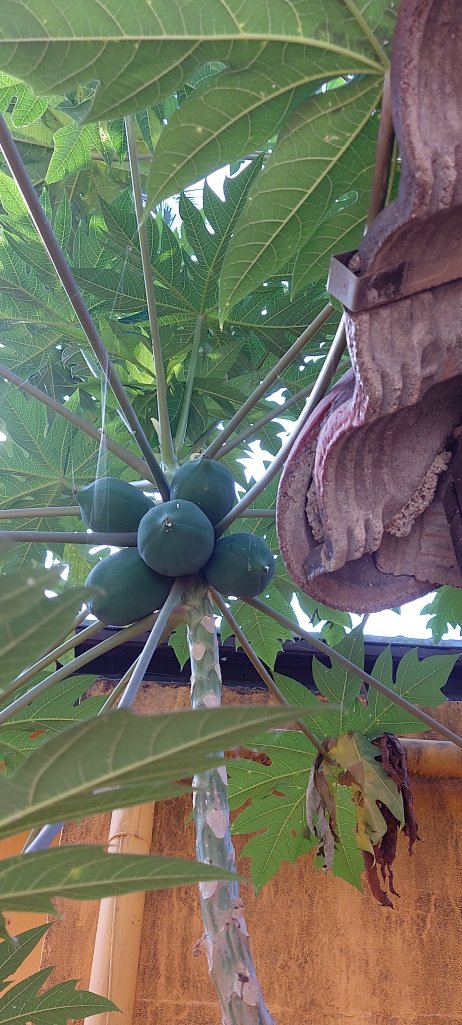
Papayas growing in the garden around the holiday home near Alibag
The author sitting
by a swimming pool at sunset in Nandgaon, near Alibag
Daily sunset walks with friends
Chilling with actress and yoga exponent
Soma Mangnani
The author braves an early morning swim in water holding freezing night temperatures…a great boost to the metabolism!

THE GREAT RESIGNATION

THE SURROGACY SOLUTION: WILL RICH & FAMOUS WOMEN WALK AWAY FROM BECOMING PREGNANT?

FOR WOMEN WHOSE FACES AND BODIES ARE THEIR FORTUNE, SURROGACY HELPS THEM GROW FAMILIES WITHOUT STRETCHMARKS, MATERNITY LEAVE, DOUBLE CHINS, VARICOSE VEINS AND UNGAINLY SILHOUETTES. SANGEETA WADDHWANI CALLS OUT A HISTORIC SHIFT WHERE GLAMOROUS WOMEN ARE CHOOSING NURTURE OVER NATURE

The Duchess of Cambridge popped out three royal munchkins without skipping a beat. She had nary a baby bump to worry about, and faced the 24/7 paparazzi looking immaculate in her Buckingham Palace-approved blue chip wardrobe.

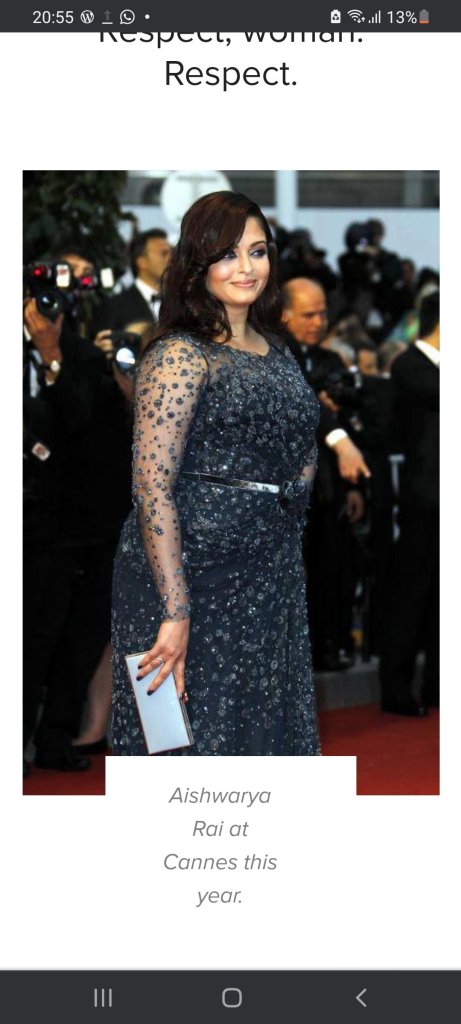
Here in India, an as-much-under-media scrutiny Aishwarya Rai Bachchan swelled up half a decade or so after marriage, both with pride and pregnancy poundage, subjecting herself to the age old female script of career, marriage, babies where the latter often takes precedence over every other consideration. Till the pregnancy happened, the ruthless and tasteless desi yellow media went on about her having TB of the uterus, and other idle and evil speculation. It was a bizarre trial by media, as if an actress’ life MUST pan out in a filmi sequence. It never occurred to the largely female newspaper snipers that an actress may choose to NEVER expose her delicate contours to the riotous disruption of a pregnancy. Because Ash was a good middle class girl from suburban Khar, she put herself through the nine yards (read months) of identity sabotage and bore Aaradhya like a badge of honour. Remember how photographers delighted in capturing a much fuller Ash with an almost vanished waistline on the red carpet at Cannes?

A director who cast her in an archetypal role as the Paro of Devdas, even went on record to say “Beautiful women should never become pregnant.”

As is custom in showbiz there were whispers and murmers all over about this fuller version of iconic grace, having lost her IT factor to motherhood.

Now let’s be honest. There definitely is a lot to be said for the price Nature elicits from women of beauty becoming fecund and real, their bodies like rivers in spate, waiting for the harvest of a ripened fetus.

Ash took a five year sabbatical from the headless marionette routine of fittings, rehearsals, light, camera, action, film promotion, and so on. She didn’t think work, wealth, pulchritude and performance in reel life were the only things that mattered.

It was the same with Shilpa Shetty, who put herself through the whole sacrificial spectrum of pregnancy when carrying her first born. Viaan. She had shared with me for a special exclusive cover story, that her muscle tone got so poor and her weight at 80 plus kgs was so daunting..she had trouble squatting and picking up her toddler! So hit the gym she did with a vengeance. But baby no two was a breeze…because another womb manufactured that bun! In Shilpa’s case, she at least tried to put a story to the choice of surrogacy…she had an autoimmune condition that led to several miscarriages. Fair enough. Because surrogacy was a 21st century invention, a new privilege extended to those who could afford delegating pregnancies.

This is where we sit on the edge of an age old value system that demanded pregnancy of a married woman. It was divinely ordained that she offered the gift of new life and family to her spouse.

In centuries past, our elders did not envisage a world where female ambition would pretty much play out on the scale it has. To me, an accurate symbol of this shift, is the bi-continental supernova, Priyanka Chopra Jonas. Everything about her journey takes the tired Feminist debate to exciting questions. Should a woman marry a man a decade younger? Of another culture and nationality? Should a woman dare to be rich and famous across two continents? And my word .. Should she ‘delegate’ pregnancy to a surrogate, so she doesn’t skip a beat in her highly visible line of work? More so because at 38, when she has iconic franchises like the Matrix Ressurections and solo lead roles in Hollywood knocking..this would be a ridiculous time to get inflated, semi-retired and sentimental about growing a fetus in the fashiontastic premium real estate of her body?

Think about it. Yes of course serious commentators on the chilling exploitation of less privileged women becoming fatally ill due to a serial hiring of their wombs, have to be listened to. Authors like Pinky Virani and her book, The Politics of the Womb, raise critical issues on the subject. Legal frameworks and regulation are needed to ensure that surrogacy treats both, the Yashoda and the Devaki, (the nurture mother and the natural mother) fairly.

And one would love to hear what the feminists are thinking, as surrogacy takes consumerism to a new edge. A friend of mine, the singer and yoga exponent, Shweta Shetty, expressed how she felt about how this great new facilitator of motherhood for women in high visibility areas of work. ” I feel the bond built between the fetus and the mother is irreplaceable and cannot be experienced through surrogacy.”

We will be hearing from more women as this blog makes the rounds. What is your take?

THE SURROGACY SOLUTION

IS GENDER A FUNCTION OF THE SOUL, OR THE BODY?

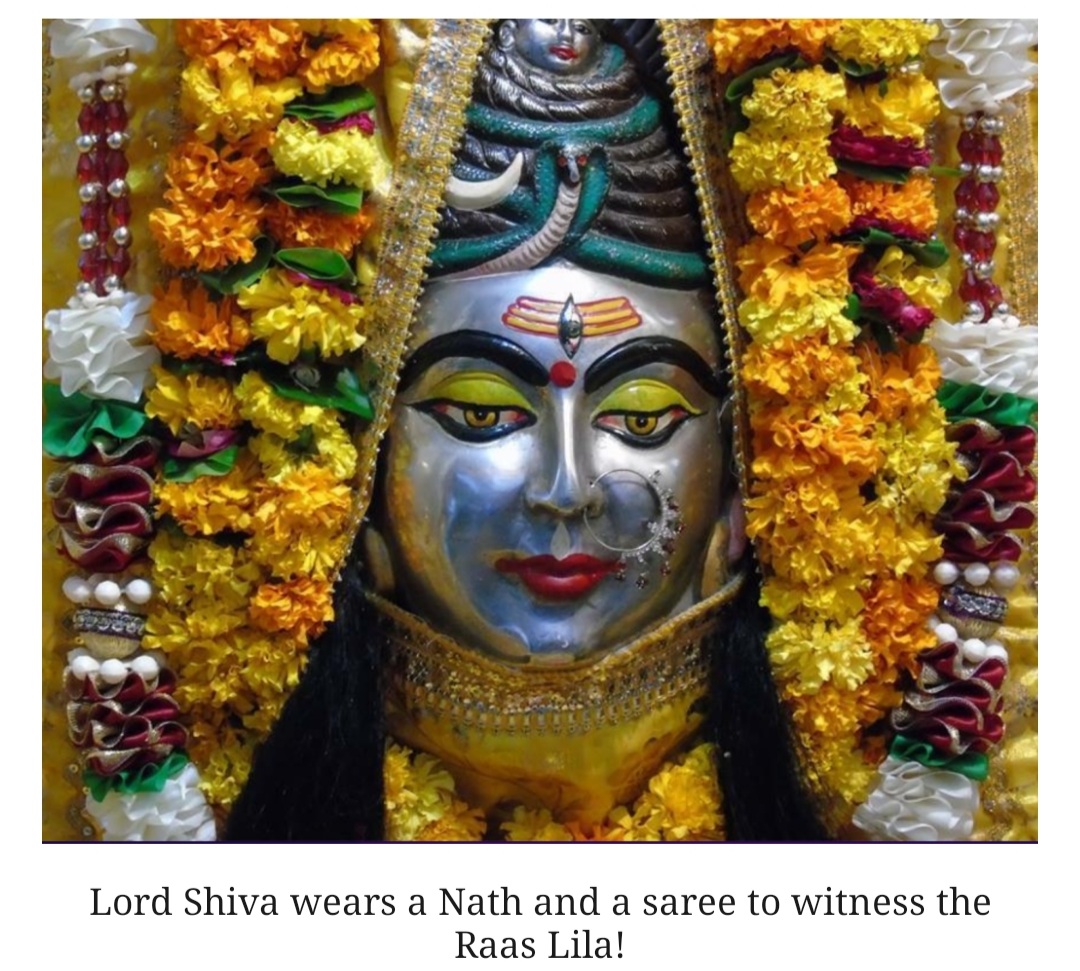
Lord Shiva wears a Nath and a saree to witness the Raas Lila!

MAINSTREAM CINEMA HAS ONLY EVER FEATURED LGBTQIA+ PERSONALITIES AS CARICATURES. CHANDIGARH… WAS THE FIRST ATTEMPT TO ZERO IN ON A TRANSGENDER HEROINE. SANGEETA WADDHWANI TALKS TO CINEMATOGRAPHER MANOJ LOBO ON THE NUANCED FILM OUTLAY TO MAKE THIS A ‘PALATABLE’ EXCURSION, AND ALSO OFFERS PERSPECTIVES FROM INDIAN MYTHOLOGY ON GENDER FLUIDITY

Through study (acquiring self-knowledge), we bridge the gap between the conscious and unconscious, the soul and ego, and the masculine and feminine.”

India’s core spiritual culture has always urged humanity to transcend dualities. So yes, while somewhere down the line, North India went the patriarchal way, and South India still held a matriarchal sway, the modern world has truly seen a flatter world between the binary of man and woman, where both are competing for the same opportunities, both operate in an information age and tech-based world, and the odds of success, truly favour grey cells over any other body part.

In the film, Chandigarh Kare Aashiqui, Vaani Kapoor’s character, Maanvi Brar, is a transgender girl. She becomes the love interest of a small-town school product, Manvinder Munjal, played by a pumped up munda, Ayushman Khurrana. She is a Zumba instructor, he is vying for a title as a heavy weight champion. The polarity is potentially perfect: An alpha-male and a hot young woman, both gym-perfect, leading independent lives. But then… they get involved… all is well between them till he pops The Question. She tells him about her sex-change journey, all hell breaks loose. The perfect couple find cracks and gaps that he, more than she, can’t bridge in his psyche.

“It’s interesting how easily a story like this could have put off a mainstream cinema audience,” I say to Manoj Lobo, the cinematographer, who admits that it was a tight-rope walk.  

“When translating words to screen, we kept it light and bright in our visual treatment. We didn’t do primary colours, we didn’t do deep shadows. To me, the fact that Maanvi was a beautiful woman, was important. The colours in the film are alive, they are happy, they pop. It is not a dark story. It is every bit a romance but with a twist.”

However, I tell Manoj, I had a little trouble ‘believing’ in Maanvi. Why? Because I had known a transgender living in my building. She was part of the jet-set elite, and that meant she had a lot of money at her disposal to ‘fix’ her body in ways that assured her of her female identity. Yet in the elevator, in her body-con dresses with plunging necklines, she would lean over and ask me, “Honey, do I look like a real woman to you?” (In fact in the end, rumour had it she died of heartbreak and excessive fiddling around with surgeries and hormones, at a rave in Goa!)

In this film, Maanvi was constantly and consistently ‘prettified’ and any hints of her identity being insecure, very subtle. “There is this scene where she is walking in the park, and hears laughter behind her. She is not sure if they are laughing at her, so she removes make-up from her bag and touches up her face,” points out Manoj, while admitting it was subtle.  

Other than the insecurities she expresses to her butch-bestie, about her fear of getting ‘dumped’ by Manvinder, because relaying the truth about her gender journey to her boyfriends always resulted in ‘the end’ for her, Maanvi otherwise, seems like any other independent migrant professional settling into a new job, away from home. No hormone pills for her. No voice breaks. No ‘practicing’ a feminine walk with books on her head. No sashaying in heels with exaggerated feminine accroutements like XL eyelashes or glitter eye shadow.

“Yes, we did meet a host of transgendered individuals, spanning all walks of society – even the ones for whom investing in the transition wasn’t that easy – but more important, we even met their partners. Because an important question was, whose story were we going to focus on? Gattu (Abhishek Kapoor) the Director was quite clear that it has to be the man’s story… a man who understands and accepts this person,” admits scriptwriter Supratik Sen. “Well ok, ‘accept’ is a big word, but at least understanding a transgender girl, is also a huge shift. And we were sure Maanvi’s character would be strong; no ‘come to my rescue’ or ‘damsel in distress’ kind of thing. The idea was for the man to step up and take the plunge. The onus was on him, to grow, evolve.”

It was a happy if uneasy ending… with a lot of unanswered questions that one would imagine a ‘hero’ seeking normality would ask…. Like how about children? Would Manvinder go to a surrogate for a family?

But let Bollywood do what it does best – tease its audience with gentle provocation. It is after all, a mass medium and the masses “respond to art and beauty far more readily than just information. So we used that route to primarily sensitize people to the trans-community. There is a lot of misinformation, a lot of phobia. Art and beauty open people’s hearts and creates empathy where otherwise there would be none,” as Manoj explains.

It is ironic that cinema is taking India back to her own highly inclusive, gender-flexible culture. In Indian myth, as mythologist Devdutt Pattnaik has often shared with audiences at various lit fests, there is room for every kind of being between the male and female polarity.

“Read the Tulsi Ramayana, from 500 years ago. He talks about how God allows all creatures inside Him: ‘Chara, char (plants, animals), Nar, Napunsak, Nari (so Man, Queer and Woman). The literal translation of Na-Pun-Sak is, ‘Not Quite A Man.’”

One doesn’t see such individuals mentioned in Abrahamic faiths (Judaism, Islam, Christianity), or Greek myth. “In Greece, one sees Man-boy love, but not a Third gender. In Greek lore, you do see powerful women not associated with men at all… like Goddess Athena, who has no male consort or lover. However, Hinduism alone had a term like Napunsak, a word for a Third Gender; it is a philosophy that speaks of diversity, obsessively.”

Years ago, I recall hearing Lakshmi Narayan Tripathi, a celebrated transgender speaker, choreographer, artiste and an activist, speaking at a public platform at the US Consulate in Mumbai, about how ancient India had very clearly defined roles for the transgendered. She talked of how they guarded the women’s quarters in palaces (zenanas), they entertained (some renowned Lucknowi courtesans were transgenderered), and they went about with their ‘maang ti’ or asking for alms in exchange for blessings metted out to newborn babies, or other major auspicious occasions. They were respected and had a clearly defined social role with income streams.

A lot of their relevance is lost in a modern nation.

This is a direct consequence, in many cases, of India’s invaders. “While the Mughals brought the word ‘hijra’ – the root word was ‘haj’ and conveyed a journey, the Mughals still had a place for the transgendered in their palaces. However, the British criminalised love between transgenders and homosexuals, throwing them outside the frameworks of ‘legal and respectable’ society, with Article 377.  India only negated that two-century old legal framework, in 2018. The gay, bisexual, lesbian population may have had to go underground, but the highly divergent ‘hijras’ were reduced to beggary. They were marginalized at every level – mental, emotional, physical, economic, social.

However, the Third Gender community has plenty of support from deep within India’s literatures – spiritual sagas that show gender-fluidity to be the path walked by all… from the Hindu Trinity to the demigods and goddesses.

“Go to Vrindavana, in Uttar Pradesh, and you will come across the Gopeshwara Temple, where Lord Shiva’s face, carved in the shape of a Shiva Linga, wears a Nath. Legend goes that the alpha-male Shiva wanted to witness Lord Krishna’s Raas Lila, but the Yamuna river did not permit him entry, telling Him only women were allowed to dance with the Lord. So Shiva transformed into a gopika,” mythologist, historian Devdutt Pattanaik had shared at a Queer Lit Fest in 2017.  

Devdutt also shared the story of another God, Aruna, the God of Twilight, who becomes a woman as he wants to see the apsaras dance. Lord Indra falls for Aruna’s female form, has a child with her, who becomes Bali. She also has a son with Surya, called Sugreeva. “Both are sons of an ‘assumed’ woman, who was initially a man!” we are reminded.

Lord Vishnu becomes Mohini to ensure the Devas get all the nectar

One of my favourite stories showing gender-fluidity by Lord Vishnu, was that of  the churning of the Ocean of Milk. With the devas positioned on one side, and the asuras on the other, the idea was to churn the Ocean of Milk till a jar of nectar bestowing immortality, arose. This was of course an extensive process: Mount Mandara was used as the churning rod and Vasuki, a Nagaraja who abides on Shiva’s neck, became the churning rope. Before the Samudra Manthana process could release the nectar, it released a number of things. One of them was the lethal poison known as Halahala. Towards the end of the churning, the devas fear that the asuras might take the pot of nectar first and finish all its contents before they get a chance to drink. So lo.. Lord Vishnu finds the perfect solution. He takes the form of a beautiful woman, Mohini, who enchants the Asuras so they don’t dare question her when she first serves nectar to the devas. By the time she finishes pouring the golden fluid into the last deva’s glasses, there is none left for them!

These stories – and many more – reveal that in Hindu lore, bodies are fluid. Gender identities are fluid. Lord Krishna is Himself an embodiment of both masculine bravery and feminine lasya; we can see him buying silks, wearing kaajal, playing the flute, contemplating nature, enjoying sandalwood body pastes – if we saw a man today with such a harmonious blend of both, warrior and musician, dancer and strategist, what would we think or say?

Let’s think of the Tribhanga pose. It is a feminine, curved stance, that Lord Krishna adopts, when playing the flute. It implies that flexibility is feminine, grace is feminine.

‘Gender is a mind-thing. Gender can be bent. Souls goof up when choosing which gender to be born in. Let’s give dignity back to those standing between binaries’

SANGEETA WADDHWANI

This resonates with a wonderful exposition by Manoj Lobo, about the film being a “curved story in a straight city. Chandigarh is built like a wire mesh. It is a grid.” In many ways, the mentality left by the British, too, was a mesh. But Lobo’s recent experiences show that the kinnars have not all lost touch with ancient systems known to their community. He recently spent two days filming 35 prominent kinnars, who came from north-south-east-west India, to a conference in a hotel in Delhi. “The idea was for them to come up with a Vision and Mission Statement, and even a Tagline. These are ways the community can build a modern identity and be immediately understood, like how you have Amul, synonymous with The Taste of India. It takes a lot of conversations and insights to come up with these statements and taglines… and I was filming all of that!”

Manoj goes on to reveal how vibrant the community is. “Some are doing social work through NGOs in Jaipur, others are even rescuing victims of natural disasters, like victims in Odisha. To this day, they have their own guru-chela system, their own gharanas, (yes, like classical music schools), even their own Akhaada during the Kumbh. There are 12 Akhaadas, all belonging to males, none for women… but one Akhaada solely for kinnars!”

As I move away from this blog, I remember how utterly hilarious gender fluidity has been in classical films like Hollywood’s Mrs Doubtfire, (and India’s saucy take with Kamal Hassan in the lead, Chikni Chaachi!) As Tantric lore says, we are all a combination of Shiv-and-Shakti. And in fact, one of Sadhguru’s books taught me that more dominating souls tend to choose a woman’s body, while more passive souls choose a male body.

At the end of Chandigarh Kare Aashiqui, we see a strong, dignified female spirit in Maanvi, who gamely reminds her lover that “I didn’t reject you, you rejected me.” However, to give Gattu credit, the character really doesn’t want sympathy. She just wants to Be.

It is only in asides that we see Maanvi’s inner struggles when she talks to her father… who feels, how long can this boy-turned-girl battle this world, how long can she be by herself, was she not exhausted always standing alone?

Fortunately, the movie offers hope…. We do not know how many transgendered girls find such silver linings, but the movie gifts a different perspective to mainstream India.

Gender is a mind-thing. Gender can be bent. Souls can goof up when choosing a gender to be born in. And then, some choose to walk the earth representing Shiv-Shakti in one body. Like Puttaparthi Sai Baba did. Let’s acknowledge our inclusive culture, inclusive stories, inclusive avataars, and give dignity back to those standing between binaries.

CAITLYN JENNER WAS BORN WILLIAM BRUCE JENNER IN 1949.

IT TAKES DEVOTION TO MAKE A NEW VRINDAVANA

SANGEETA WADDHWANI TAKES YOU, STEP BY SACRED STEP, INTO THE MYSTERIES OF SRI KRISHNA’S HIDDEN UNIVERSES, AT THE GOVARDHAN ECO-VILLAGE IN PALGHAR, NEAR GUJARAT


LORD KRISHNA: MY INSPIRATION

Sometime in the middle of 2021, I did a roller coaster course with the UK-based but globe-trotting Master Sri Akarshana on how to be a successful YouTuber. The end of the weekend webinar involved us shooting a YouTube video of ourselves talking on a subject of interest, and sharing it for a class ‘competition’. I am not sure my video got our Master’s attention, given he had hundreds of participants, but the class definitely motivated me to start a YouTube channel and see where it would go! (Do check out this link: https://www.youtube.com/channel/UChngc9lU-qexroVjBDy4I6g) or type HAPPINESS HACKS FOR A POST PANDEMIC WORLD…in YouTube


I turned to my favourite ishta-devakul-deva, Lord Krishna, for support and inspiration. I chose to relay truths and insights into human nature, how to navigate the strange New World we were in – turning to the sacred Bhagavatam and Krishna’s life stories. And I called it, HAPPINESS HACKS FOR A NEW WORLD.


SAME QUESTIONS, DIFFERENT ERAS

How would Krishna’s world ever throw light on ours? Well, didn’t we have fratricide in His times, with the Mahabharat? Didn’t we have feminist inquiries with Draupadi’s vastra-haran? Back in 1849, French writer Jean-Baptiste Alphonse Karr wrote, “plus ca change, plus c’est la même chose.”  And a loose translation goes, ‘Turbulent changes do not affect reality on a deeper level other than to cement the status quo.”


Let’s face it. We were pretty much the same people with the same emotions through the haze of time and circumstance, through lifetimes. What has shifted are our values. Where in a purer age, we were far more willing to do things for a higher purpose – be it dharmic ideas, karmic balance, love of near and dear family members and friends. Today we are tossed on the miasma of digital distraction, materialism, consumerism, an obsession with self-projection, thanks to the virtues and vices of social media.

THE PANDEMIC’S SPIRITUAL WAR

It has proved to be the biggest challenge of our century to wake up to the true brilliance within…. Where so much has been taking our focus out and away from our true power, our Source, our Centre. The Pandemic came to slay those demons of distraction and destruction – or at least reveal them to us. Entire industries were ripped and exposed – nepotism and drug-nexuses in entertainment, the thriving porn industry and its immaculate practitioners. The print media and its powerful players had to bow down to the ‘everyday’ journalism generated by thought–leaders from every walk of life, shaping people’s views, buying habits, engaging live communities for better or worse. The new heroes and heroines were doctors and nurses and pharma giants. The honest ones, the self-sacrificing ones. Even the PM realized he was standing in front of a tidal wave of change… and now when one sees it, Modi-ji was not so off the mark when he tried to bring digital transactions to the forefront with demonetization. He was a few years ahead of a time when going to the bank would be hazardous to health!


So to return to Sri Krishna, I truly believe that he is closer than ever to his old-world style followers, or devotees, and is one of the most viral among divine deities because his philosophy is pro-life, pro-wealth, pro-growth, pro-dance, pro-music, pro-fashion. He understands the Maya or illusory nature of our material world better than any other Divine friend could, because he exposed himself to it in His many incarnations and sacred missions.  

 PHILOSOPHY AS LUXURY

Pre-Pandemic, my friend Viraj and I often signed up for evening talks on how scientific the cosmology of Sri Krishna’s Universe is, and how empowering it is to understand the subtle and not-so-subtle workings of Karma. These lectures were held by HG Prabhu Braj Mohan Das of ISKCON. Prabhuji is an IIT graduate, and has a gift for contextualizing spiritual knowledge to the news and everything around us in this world of ‘Maya’. So we would be regulars, sitting in the beautiful temple hall at Chowpatty, Mumbai. Feasting on the delicious ISKCON prasadam dinners after the lectures – very welcome as we were coming in from heavy duty corporate working hours!

While to be honest I was not a great devotee when the lectures moved to Zoom, things changed radically when the lockdowns were fully eased, and an opportunity to experience living at the Govardhan Eco Village in Palghar, during the moonlit, nectar-filled nights of Kartik Poornima came up. Accustomed to our creature comforts, my friend and I were prepared to ‘slum’ it on this three-day visit, quietly trying to spot baniya stores on the outskirts of the campus ‘just in case’ we needed mundane supplies.


I think Sri Krishna had the first and last laugh!

 BEAUTY SACRALITY MEET MODERN IDEAS OF SUSTAINABLE LIVING

There is one irrefutable truth about any of Lord Krishna’s paradises – they seem to grow organically, effortlessly, into spaces basking in all kinds of abundance. We felt like we had the best of both – civilized comforts and nature’s coy manifestations, be they rare flowers, butterfly groves, raat ki raani fragrances that intoxicated us as we strolled under moonlit skies. We later heard HG Prabhu Gaurang Das expand on how this eco-village came to be; how its first ‘attraction’ for international supporters was a ‘gaddha’ or donkey that was “full of love.” They called it the ‘eco-village’ fully aware the ecology was dear to their international community’s hearts. It was a revelation to hear that ISKCON is really embraced fiscally and physically as an Idea, by a vast global following… and this was true from its earliest days, when there were 10,000 devotees in America, and a mere handful in India.

While HG Prabhu Gaurang Das made light of the splendour of the village, confessing that he would envision Parikramas of the temples here even before they were built, what I took away from his story, was that somehow, mystically, no matter how grand or foolish an ISKCON believer or leader’s vision is for a new temple, or a new Vrindavan, somehow, it manifests in full glory. He later explained that there are 11 Vrindavans spread around the world!

When we reached the reception, we saw how sophisticated our ‘village’ was… electric, solar-charged buggies were to take us to our room complexes. There were villas on stilts, there were pretty dorm room complexes called Vrindavan… and our double room was in a beautiful, solid building called Mahavan. The floors leading to the rooms had gorgeous terracotta and earthy toned-tiles and looked Moroccan. Flanking all the residences were beautiful flower groves. The balconies had a view of the Sahyadri mountains. When we entered our air-conditioned room…we were amazed to see the colour of Sri Lakshmi – gold lacquer… all over our traditional furniture, which my friend identified as being the Sankheda style from Gujarat.  I fell in love with the golden closet featuring two larger-than-life peacocks painted in black over the gold. Our floors had polished granite tiles and our bathroom was large, with those lovely Moroccan tiles and a well-appointed shower chamber with a glass door. There was hot water and cold water, 24/7 on demand. Just as well as we had to be up at 3.30 am, showered (to respect scriptural dictates) and at the temples to wake up with The Lord and his Radha Rani, in the Brahma mudra hour.    

The day we arrived, a deep respect for nature was evident as our very first stop was to be the Gaushala. The cow shed. We didn’t make it according to schedule but we did visit the Gaushala the following day, and fed the holy cows. Few other countries have the reverence for cows that India has, and I remember reading somewhere that to every Indian, she represents FIVE boons – first, she nurtures humanity with milk. Then, her dung becomes manure, and today is also collected to produce biogas and generate electricity and heat. (The gas is rich in methane and is used in rural areas to provide a renewable and stable source of electricity!)  The male of the species, the bullock, helps to plow the fields. In many village homes, dung cakes are dried in the sun and then applied to the walls, to ward off mosquitoes. Cow urine is also used as medicine in Ayurveda.

Our eco-village had a solar power ‘shed’ just near the Gaushala, which made us feel less guilty about keeping the room ac on. Somehow, being close to Gujarat, the humidity and heat was far more intense than it was in Mumbai, and we would often shower thrice in a day just to feel energized and fresh.

As we were busy feeding the cows, we saw wild peacocks on the fields just behind… and just the day before, I had come across a sign about the relevance of the peacock in Hindu myth. One, a peacock feather was always a part of Lord Krishna’s ‘look’, and do we know why? So legend has it that His flute music had mesmerized a group of peacocks and they danced till the point of exhaustion. In gratitude, the King of Peacocks offered his most prized possession – his feathers, to the Lord. Sri Krishna accepted the offering and wore one feather in his hair, forever after. I found it no coincidence that I was getting a chance to delight in the peacock prancing around in front of us…what a gorgeous, iridescent blue, its body was…and what stunning shades of green on the neck and wings… I also read in a signpost that the peacock was the Goddess Saraswati’s mount! To me, it was a creature symbolizing everything creative and graceful…until my camera got too close to its beautiful back and it pounced on my phone A proper and first time ever peacock attack!;)

However, there is another fascinating dimension to the peacock that I came across on India.com:

“The brilliant colours of the peacock do not arise from the correspondingly coloured pigments. Instead, they arise from the phenomenon called ‘structural coloration’. The light waves entering the different thickness of keratin layers on peacock feathers get out of phase and undergo interference. The resulting light wave patterns give the beautiful play of colours which the human eyes see. The ‘actual’ colour is just a deep brown pigment which occurs in the background of these keratin layers.

Thus, Lord Krishna wears a brilliant example of His own Maya in His crown and stimulates our intelligence to understand the fact that the whole universe is a diverse manifestation of one single divinity. Thus, we are also supposed to understand the nature of Maya continuously during our life so that we do not get carried away and suffer due to its influence. If we also start wearing this idea in our mind, like Krishna wears is symbolically in His crown, then we can also enjoy this life in the manner Lord Krishna wants us to live.”

Do you see what one means? There is no aspect of Lord Krishna that doesn’t resonate at multiple levels. We felt his and Radha Rani’s blessings as we walked barefoot towards the Radha Kund and the Shyam Kund – miniature ponds in imitation of the life-sized ones in the ‘real’ Vrindavana in Mathura, Uttar Pradesh. What really were the legends behind these ‘kunds?’ We read on Wikipedia, “According to popular legend, when Lord Krishna slew a mighty asura (demon) in the form of a bull, his consort Radha asked Krishna to wash off his sins by taking dips in various holy rivers. Krishna laughed it off and struck the ground with his foot whereupon all the river goddesses emerged in front of them and filled the ground with their water. Krishna bathed in this kund (temple tank ) to please Radha.  Later, this water reservoir was called Shyam kund. Opposite to Shyam Kunda, Radha and her friends also dug out the ground which was filled with the holy water of Shyam kund by Krishna. This water reservoir is named after Radha and is called Radha kund.  Krishna then took a bath in the Radha kunda and announced that whoever bathes in Radha kund will be blessed with the intense love (Prem-Bhakti) which Radharani has for him. Similarly, Radharani also took a bath in the Shyam kund and announced that whoever takes bath in Shyam kund would be blessed with the love that Krishna has for her. To this day, millions of pilgrims desiring love for Radha-Krishna  come to this holy spot to take a bath in a reverential mood, bathing first in Radha-Kund, then in Shyam-kund, and then again in Radha-kund. This is the only place of pilgrimage where an auspicious bath is taken at midnight!

 We delighted in the Deepavali-like ambience on the banks of the miniature Yamuna river, where kirtans were held every night at sunset and beyond. Everywhere we walked, even when we had minor traumas locating our chappals, we were delighted by the smells of fresh plantlife, our bodies thrilled with the prana or life-force rich ambience. (A little footnote – one is encouraged not to keep footwear on when doing a parikrama or walking towards the kunds or touring the diadems in the forest, so I would recommend keeping freshly washed socks handy if you have sensitive feet!)

The meals at the Govardhan Eco Village were so flavourful and made in such generous quantities, it felt like the Goddess Annapurna herself presided over the kitchens. I particularly loved one dish – masala bhindis soaked in lightly sweet yoghurt curry…hmmmm. Their kichdi – dal soaked rice with carrots and potatoes and peas, was also somehow laced in such fresh flavours, nothing from a fancy seven star could match its wholesome flavours. It took us right back to the delicious ISKCON dinners at the Chowpatty temple in Mumbai. Each meal had chaas, papads, and an Indian sweet side dish – seera or kheer or srikhand.

Being spoilt city girls, the early morning rituals sounded almost cruel to us. The havan pooja was held at a special havan hall, open on all sides to the forests around, at 6.00 am sharp. Since the drivers to the buggies were not usually around at this hour, we found ourselves guided by a beautiful wild dog right towards the hall. The havan we realised, was about summoning all the devas and devis and putting before them a manokama – a heartfelt wish. Our brahmin explained that in earlier yugas (eras) it was common for people to pray for 1000s of hours, sometimes months and years across generations… and new beings would manifest through the yagna fire – like Draupadi did! But in the Kaliyuga, the age of instant gratification, the devas and devis were called upon within just two odd hours to hear human wishes and grant them:( However, we did the ‘swahas’ when asked to, we did the parikrama of the yagna fire, and we ate the delicious prasad.

For me, the peak of our time at the Govardhan Eco-Village was the final parikrama around the two sides of the little Yamuna – “We have seven forests to one side, and five forests to the other side of this bridge,” explained Prabhu Braj Mohan Das. As we walked, we were told fascinating stories about Sri Krishna. One, how he often benefitted seemingly evil creatures even when he demolished or fought them. Like the demoness Putana, who had poisoned and killed hundreds of infants by feeding them breastmilk laced with poison on her skin.

She came to do the same to little Krishna, but he not just drank her milk, he also sucked out her life force. However, her soul ascended to the higher realms and not hell, because for a few moments, she had truly maternal and loving thoughts about Krishna. The moral of this story is, the Lord is able to redeem a soul based on even a minimum of genuine virtue – and we are asked to do the same. To not focus on the negatives but the positives within all who cross our path, and to reinforce that which is positive. Sounds easier than done, but it is worth trying!

The other fascinating diadem showed Lord Krishna dancing on the heads of the venomous Kaalia serpent. “Krishna liked drama, so he asked Balarama his cousin to rally all the villagers and showed them how he was wrapped up in the coils of the serpant. As soon as the panic reached breaking point, he had himself out of its grip and dancing on the snake’s many heads! In one way, he was actually blessing the serpent, leaving his divine footprints all over its heads, protecting it from predators….like Lord Vishnu’s mount, Garuda. “Why did Garuda never come to Vrindavan and attack this serpent? Because it was protected!” shared Prabhuji. He also shared that Kaalia represented certain darker aspects of human nature – jealousy, anger, and in more modern terms, our tendency to poison our planet. “Krishna was the first eco-activist, seeking to destroy Kaalia because the creature was poisoning his beloved Yamuna. By poisoning Yamuna, even the plant life, animal life, and human life was being negatively impacted. He spared Kaalia’s life because the snake had two naga wives who were devout followers of Sri Krishna. But he told the snake to go to the Fiji Islands..and to this day, there is a Kaalia temple there…. And people claim to be have spotted Kaalia!”

HARE KRISHNA!

Prabhuji also pointed to his U-shaped tilak, saying, “The coil represents the footprint of the Lord, and the dot below, represents the Tulsi of Sri Lakshmi!” We also noticed that wherever there was a Radha temple or a Radha Kund, we found the Tulsi plant growing naturally. To me, this meant that nature was synonymous with Shakti in any form – be she Radha Rani, Sri Lakshmi, or any other goddess. Prakriti was feminine. And so alive.

We later saw another ‘scene’ or diadem showing Lord Krishna getting married to Radha Rani at Brahmi Van. I could not resist asking Prabhuji, “But didn’t they love each other unconditionally? Why did he leave her behind after he went to Mathura to kill his evil Uncle Kansa?”  It is truly a part of the Krishna saga I never understood. “Krishna’s avatar wasn’t only about fulfilling his heart… he had layers of karmic obligations. All the many wives he later married were actually princesses who had been abducted during wars. In those times, if a single woman spent even one night outside her father’s home, she was considered unfit to marry. So as Lord Krishna knew they had no future, post-war, he married all of them. Also, he knew that too much ‘swakiya’ – too much stability, actually took love out of a relationship. You will never see a husband dressing to the nines to impress a wife of 20 plus years!” he joked. So ‘Radhe-Shyam’ actually means, “where Love meets Longing.”

And so we left yet another painstakingly beautiful sacred space, both cultivated and self-manifest, as another graceful Prabhuji told us, “Not all the trees and flowers had to be planted by us… some were already a part of this forest land.”

We had hoped to capture in more detail, the carved panels of the Radha-Govinda temple, each panel revealing a story around Lord Vishnu’s avataars and scenes from his many incarnations. But so hectic were our schedules those three delightful days of the Kartik Poornima, that we made a silent promise to return again soon. However, as the Prabhujis tell you, “Coming here is not purely your intent, it is only through the blessings of Radha Rani that you come here.”

To be honest, both my friend and I felt like ever-young gopis and part of Radha Rani’s personal circle of friends, when we visited the GEC gift shop at the Satsang Hall, and came across delightful chaniya-cholis and Anarkali outfits, made in the sacred Braj bhoomi of Vrindavana. The words of HG Prabhu Madhav Das echoed in our hearts, as we moved through the fascinating eco-village… “See we believe that in the sacred groves of the actual Vrindavana, in Utter Pradesh, the divine leelas of Sri Krishna, Radha Rani and the gopis, are occurring all around, 24/7. But we have mortal vision, and need the Divya-Chakshus or divine vision, to see them. Which is why at sunset, every living creature leaves the sacred forest and temples there. They are not equipped to handle that energy or that grace.”

Prabhu Gaurang Das made it clear in his talk at Radha Kund, that the Govardhan Eco Village needs devotion for its consecration… “it is a reciprocal relationship, the more we praise the Lord here, the more we do havans, kirtans, bhajans, and evoke the Maha Mantra, the more precious and blessed this space becomes. So you devotees are also an important part of the ‘construction’ of a dham like ours! It is not only about the physicality of our temples and forests… but about the vibrations we create here to attract Divine Grace.”

Hare Krishna, Hare Krishna, Krishna Krishna, Hare Hare! Hare Rama, Hare Rama, Rama Rama, Hare Hare!

ZOOMING IN…AND OUT!

THERE ARE LINKS TO VIRTUALLY EVERY EXPERIENCE. DO WE LIKE THAT? MORE IMPORTANT, ARE WE STILL STRIVING OR THRIVING? SANGEETA WADDHWANI WELCOMES YOU TO A BRAVE NEW WORLD!


Almost everybody you know has adapted to the unique ‘mediated’ reality of the Pandemic, where everything – from hanging with friends, family, keeping a business afloat, to payments to your baniya and takeaway meals –  has a zoom version or a digital wallet solution. Do we dig this? Have we adapted? Where are you on the spectrum?

THE END OF ‘BUSINESS-CUM-PLEASURE’ LUNCHES

Here’s a story that is screaming to be written.

The Digital Connect vs The Human Connect.

Is it one and the same thing? If you are spending a lot of time on your own, trying to fool yourself into thinking, ‘well I spent much of the day meeting people online,” just pinch your arm and be a kinesiologist for a bit and ask your body… do you miss hugs, handshakes, eye-to-eye smiles? Do you miss the unique auras and perfumes of the people around you? Do you miss the business lunches and dinners that showed you how your colleagues wind down while talking shop? How you got to learn about the best wines and potions to enjoy your Italian fare with at random events?


DIGITALISING BUSINESS, LIT FESTS AND CULTURAL EVENTS: ACROSS CITIES.

To me, travelling to a new country for business would encompass not only your actual business meetings, but moving through the streets of a new city, trying new flavours, shopping for loved ones, picking up the vibe and vitality of a different culture. These days, all one does is send out a zoom link and speak. Head to head. Megapixels and bytes.

To be fair, I did find it easier to focus on the Jaipur Lit Fest sessions purely on the content level, but how I missed the 20 degrees Celsius temperatures, deep fried kachoris and savoury chutneys, the kullad chais, the roar and applause of a LIVE audience, the sheer variety of faces and warm humanism in the global throng, the vivacious riot of colours that make the Diggi Palace such a travesty of dull academia, the eclectic stalls, and the floodlit dance and cultural presentations at Amber Fort, the Jaipur City Palace, the publishing parties and the Writer’s Ball at Rambagh! Also Jaipur is like a Paris at the time of the lit fest… rich in architecture and artistic expression. So though the Teamworks team had done a fantastic job with their curation and online simulation of the Diggi Palace…  I missed the holistic treat to the senses, the social, fashion and culinary dimensions around JLF, immensely.


DOES ZOOM MAKE THE HEART GROW FONDER?

Romantic relationships operate the same way – there has to be great love for an offline, tangible connect without vaccine certificates and paranoia. Nobody wants to die for love – nobody wants the kiss of death…they may take a chance on lust, but love…who has the time yaar? Now is this good or bad news?

To me, it’s a mix. Pre-Pandemic, casual, physical entanglements brought a consumer nature to relating. It is not at all in synergy with India’s sophisticated notions of togetherness, where a truly dharmic relationship may have put two strangers together in holy matrimony, but over many decades, that relationship evolved to embrace ALL the seven chakras – mind, communication, heart, power equations and sexuality. Shiva and Shakti enjoyed this kind of bond… there’s was a passionate and complementary bond but primarily egalitarian, friendship-based. Shakti or Parvati asked Shiva so many questions about the Kaliyuga that he shared with her the Nadi Shastra – the tale of every soul that would live in this age, inscribed on leaves. That tale encompassed data of around two lifetimes or more per soul. As equals, Shiv and Shakti sparred mentally, they often played chess games, discussed the depths of spiritual truths, and of course, explored the depths of passion as well. The physical distance brought about by the Pandemic perhaps taught Gen Z that love can be a mental construct and not always a hook up!


But going beyond the personal realm, I have seen amazing ‘pivots’ among entrepreneurs, fashion designers, (so many couturiers went online with diffusion and prêt lines, I have lost count!), PR people, (who suddenly saw old print models of media vanish into thin air), and even film-makers, perfumers, who were either used to working with large ensemble teams in real time and space when shooting their films, or in the case of perfume, having clients sniffing an assortment of fragrances in real time and space before picking their choice.


DLC: A SUPER-AMBITIOUS IDEA IS BORN OUT OF THE PANDEMIC

Here are some fascinating stories, starting with the Della Leaders Club, founded by serial entrepreneur Jimmy Mistry, known for his six resorts and lifestyle store in Lonavala. They say a good entrepreneur sees an opportunity where others see a challenge. Jimmy came up with the idea of setting up the world’s first business portal during the first year of the Pandemic, hiring people when others were on a firing spree. He could have mourned the frequent shutting down of his resorts or walked away from this new dream seeing the gamble it entailed. But come June 12, his 50th birthday, and we got a taste of what the Post-Pandemic global community looked like as the Della Leaders Club launched; voices spoke from across 26 knowledge domains and 15 thought and creative capitals around the world! The ‘live’ audience was limited, but the event was staged elegantly, in a ballroom at the Della Luxury Resort…and it literally felt like we had travelled around the world while seated on our chairs; in one beautifully curated ‘zoomed’ evening.  We heard from five spiritual figures of five faiths, on why knowledge-sharing is part of human evolution. We heard from Fern Mallis (New York Fashion Week), from Steve Rodgers (former CEO Warren Buffet) and many, many more on why a space of free and rich knowledge exchange, lifestyle guidance and social responsibility, serves up unlimited potential for building a support ecosystem for leaders globally.


PIVOTS AND IPS: THE NEW NORMAL

Let’s look at how some others ‘pivoted.’ I for one, (while being a Lifestyle Consultant for DLC) started teaching the fine art of Creative Writing on zoom, finding my students coming in from Montreal, London, New York and of course, India. It became a rich experience for them to gain insights into Indian stories, our notions of myth and archetype, and I in return, had students sharing movie scripts from Hollywood, discussing ideas and global politics – the quality of the class narratives were super exciting! This gave me immense joy and creative satisfaction, to help others discover their inner Kalidasa, so to speak! We also visited the voices of fiction and non-fiction writers and experimented with Ekphrastic poetry. It felt like I had discovered a new talent, that of firing up imaginations and making people passionate about self-expression. Each individual has a museum of stories to share, but sadly in our information-overload times, people rarely tap into their inner storyteller. Creativity is therapeutic as my friend Mimi Rao (Associate Director Ernst & Young, UK) observed, while in my Masterclass. Sharing insights in a like-minded group is also a rich experience.


BACK TO BUSINESS: HOW DO YOU CHOOSE YOUR PERFUME ONLINE?

My friend Sheetal Desai, Founder & Curator of Fragrances – wiSDom, and Founder & Director SD Scents, had to deal with the Pandemic disruption just about the time she was raring to go all out with her perfumery brand. She had a history as an entrepreneur for 25 odd years, having worked closely in all aspects of the fragrance business – ‘right from marketing and evaluating a portfolio of renowned brands to building entire manufacturing units and setting up international business units within my family business to setting up and leading entire cross-functional teams as CEO,’ as her Linkedin profile tells us.

As an independent entrepreneur, she was launching her own fragrance brand in December 2019, expecting to popularize her merchandise through live exhibitions the first year and be present in stores by the second year. However, by March 2020, “everything came to a standstill,” she points out. “I had to very quickly adapt to going online. I didn’t have a website yet, barely understood Instagram. The first thing we did is get listed on an e-commerce site so people could shop. We then got on Instagram and other e-commerce platforms.”


The big challenge was, since perfumes are such a sensory product, how do you sell them digitally? “Fragrances are usually bought while smelling them personally,” she admits, but found her way around this conundrum – a miniature series where the customer gets to try three fragrances at a much lesser price than a typical 50ml bottle. Another innovation was to design the miniature series in such a way, that “the consumer can layer their scents and in the process, curate their own unique fragrance!”


A classic case of finding new opportunities when challenges present themselves!


FROM PR ON INTERIORS, ARCHITECTURE AND DESIGN TO ART CURATON FOR PUBLIC SPACES

Sakina Rangwala, a Communication Consultant and partner at Eztablish Design Communication, suddenly gave me a heads up to view a spectacular display of contemporary art at the Palladium mall, before the Second Wave of the virus hit us. A professional acquaintance and a friend of mine, she explained how her company decided to pivot into supporting art exhibitions in public spaces, owing to the overall sluggish event and brand calendars… not to mention how most solid print entities were out of circulation! “We saw almost all content going up on their social media or websites,” shares Aziz Amin, Founder, Eztablish Design Communication. “We started sharing video content for these platforms. There were lots of changes in the way the industry was functioning, in general. The events aspect of our business had come to a standstill. On the commercial front, clients were not always able to meet their commitments on time. But where Work From Home as a modality goes, we were doing it before the Pandemic hit! Overall, as a business, we had to deal with the fact that things were in flux, there was no certainty, anything could hit us at any time!”


NEW AVENUES FOR OLD

“We started as purely a PR outfit, did our first solo event in eight months. About a year-and -a-half into business, we introduced our Social Media management department. A little before the Pandemic, we were thinking of getting involved with art… it was an area we were passionate about as a team. Initially we got some artists on board for our PR division, promoting them. Then, we started Eztablish Art where we made it a platform for designers and architects to source and discover artists for their projects. It was exclusively for the design and architecture community. Then when the Pandemic struck, we could not do any physical event or activity. When we did find the opportunity, it was with the Palladium mall, Mumbai. We did it as part of the Luxe Fest event, putting up sculptures, installations and art works in the atrium and other open spaces. We had about 25-30 featured artists, some very established and some getting there. That gave Eztablish Art a great boost,” he shares.  


ART AS AN ONLINE COMMODITY

“We are now revamping our website, creating an entire hub of artists, be they digital, fine artists, sculptors, to enable people to buy art directly off the site. By the end of 2021, we will have an entirely new website in place, and are looking to do smaller events in the next couple of months. Hopefully once things relax more in the event-space, we will boost our event logs and see new revenue streams generated by selling art in public arenas,” shares Aziz Amin, on an optimistic note.


HIERARCHIES MELTDOWN: DATA IS GOD

Devita Saraf, the energetic and passionate young CEO of VU television shares this golden insight into The New Order: “I think whether one is a CEO, an Editor-in-Chief, there is no scope for power play anymore. Whereas earlier it was all about one individual’s brilliance trickling down, now in the age of Artificial Intelligence, it has become more about data and looking at trends, what a consumer wants. Decisions are more about collective intelligence. A leader has to be humble and tuned in all the time to adapting to data and insights from consumers in real time.”

She also sees another over-riding Shift which has major implications for marketing professionals: “Earlier brands invested in pop ups, events, on ground retail and exhibitions to become ‘visible.’ But today you don’t really need to have those points of interaction as your consumers are revealing far more about their lifestyles, friends and chosen products and services on social media. If you can communicate digitally, it will save you time AND give you targeted reach.”

WORK FROM HOME’ AND NOT DESTABILISING YOUR EMPLOYEES INCOME OR JOB STATUS

Many CEOs have trust issues when employees choose to WFH or adopt hybrid formats of working and it has been heartwarming seeing the former CEO of Worldwide Media, Tarun Rai, (the company flourished creatively and had a fantastic, happy vibe under his progressive, people-centric leadership)…it has been fantastic seeing him share a post on LinkedIn that CEOs need to trust in their teams with remote work options. Says Devita, “At the end of the day, people work because they need financial stability, and no matter how trendy a CEO may seem telling people to WFH and not come back to office, it’s important to pay people in full and on time. Good leadership is about caring for your employees’ well-being and careers.”

SURVIVAL: NOT OF THE FITTEST BUT THE MOST FLEXIBLE

So there you have it… just a tip of the iceberg on the Age of Pivots, survival not of the fittest, but most flexible. As eras go, this one will be remembered as one of immense paradoxes… love but don’t touch, consume but recycle, spend but save more. Where babies at airports were unvaccinated and unmasked while their parents were subject to both protocols. The ink of my metaphorical pen dried up as stimulation moved to screens rather than real life scenes… and as I move away from this blogpost, I do hope that when we resume living… real living… we live with far more sensitivity to the message this brought us. That true wealth is having company, the ring of laughter at a party, the clink of glasses at a toast, the thrill of watching live gigs, be it Coldplay at the MMRDA grounds of Mumbai or classical music performances at the Ajanta and Ellora caves. There’s so much more to life than branded goods, sensory satiation, and empty social comparisons. 

SHILPA SHETTY AND THE KUNDRA CONUNDRUM…

SANGEETA WADDHWANI REVISITS THE VIVACIOUS, LIFE POSITIVE, PRO GLAM, NEW MONEYED PROFILE OF THE ACTRESS IN LIEU OF THIS NEW SKELETON..

This is Shilpa’s last post on Instagram before her husband Raj Kundra’s arrest was announced. Her caption says, “We may not always have the power to change what’s happening around us, but we can definitely control what happens within. That is only possible through Yoga…”

Years ago I had met Shilpa Shetty at a brunch in a sea facing restaurant in SOBO and found her to be in career limbo (no Big Brother had happened yet and no Raj Kundra either). But she was fun, approachable, hopeful….AND helpful. I told her I had admired her no make-up, very close-to-reality portrayal of an advertising executive in a film about AIDS… where her character gets AIDS from a past love and then had to live through stigmas, boycotts at work, and all other kinds of hell. A film called Phir Milenge, made by a woman, Revathi, which for the first time made me see Shilpa Shetty as an actor of calibre, not just eye candy.

We chatted later on the phone about the behind the scenes dynamics of Bollywood…even touched upon the proverbial casting couch. Her response was that it exists in every industry..but yes, when a few women bring that game into play to rise in their careers, they bring the bar to that level for all their competitors. This conversation at that time was, was for my novel, Bollywood on the Bend.

At that point , Shilpa had shared that she was quite resigned to hanging up her chamak challo gear and was ok to be remembered as that actress who did cool item numbers!

Things changed of course when Shilpa entered the Big Brother Reality TV show in January 2007…the year HELLO! magazine launched in India.

It proved to be a trial…a cross-cultural war zone.. and a transformational event. For close to a month Shilpa tolerated a bunch of crude rascist bigots on the Big Brother show in the UK..winning that season with a handsome prize of 100,000 GBP….and seeing her celebrity quotient sky rocket! She shook hands with the Queen (whose brood in more recent times also proved to be bigoted when one member questioned what the colour of Meghan Markle’s son would be…ironies never cease.)

Shilpa… whose life until then was so devoid of momentum…(I remember her manager then, Dale Bhatnagar, proposing a cover when I was at L’Officiel and all of us turning it down)…well after Big Brother…HELLO! UK flew down to Mumbai to capture her at her maiden home in suburban Mumbai with her extensive Ganpathy statue collection. This was circa 2007. It was a lovely shoot. The smart Shetty had billed herself to be as popular as Aishwarya Rai in India…and the foreign press was lapping it up. Well the media couldn’t care less about who she was in India… she had been acknowledged by the Queen!

The lesson one can take from Shilpa’s journey, is that you may sometimes lose hope when your work trajectory comes to a halt…but you should never give up on yourself. Shilpa took care of herself to a point of religiosity… she still does.

When she conquered the trashy reality TV housemates in Big Brother, she was well turned out, fit and even tried winning over her TV housemates by cooking for them. They kept sarcastically calling her ‘the Bollywood Princess’.and worse, the late Jade Goody told her ‘you smell like a curry’…

After her trial by TV….and her incredible transcendental triumph, Shilpa Shetty was hitting covers with the moniker EXCLUSIVE all over. Her time had come.

Her Prince Charming…suitably christened Raj..also entered her life around that time. They met presumably as he was to promote her eponymous perfume in the UK.

There was a beautiful shaadi to follow, many more personal milestones..but yes…she was very vocal in those early magazine stories about her desire for a weighty diamond at the time Raj proposed to her. In an interview with Shibani Dandekar, for the show Love, Laugh and Live Show, she talked of the special ‘lunch’ that Raj invited her to, in London, pulling out his proposal ring when dessert arrived. “It was a five-carat diamond ring and I might sound really materialistic but I was like, ‘It’s just five carats.’ I took a while to say yes because I was like, ‘This is not what I imagined.’ No, no, I am just joking. Because I took two seconds more, he was like, ‘The wedding ring will be bigger.’ Raj clearly delivered on his promise, a 20 carat diamond ring which Shilpa has stated, will go to her future daughter-in-law ‘if she treats me well.’

With the status of a reality TV Conquistador, I heard of a change in the lady’s attitude. “Shilpa will only talk to you if you have money,” was the new social verdict. It didn’t sound very palatable. It sounded New Money.

And one sensed it. We did a wonderful exclusive when her son Viaan had turned one, for HELLO! He was adorable. Shilpa kept us waiting for nearly half a day and then didn’t appear to be seeing people as individuals with histories and identities anymore. She didn’t seem to recollect our past conversations with any gravitas but gushed over a baubly socialite we bumped into. Yes it was a palpable attitude shift. This version of Shilpa I would not have called for a casual research chat for a book. This was a full fledged celebrity and through her lens, everything now had to do with ‘bigness’.

Can I be blunt? This new hauteur wasn’t very attractive. But then that is ironically why – leaving their propensity for rascism aside – British social values seem far more evolved to me. My dear friend and fellow journalist Naomi Canton explained them to me over a Starbucks coffee in London. “The British will value you based on how you treat people, not your branded bags and personal effects!” She said you will only see new moneyed tourists flocking to Harrods and Selfridges which the truly old moneyed Brits find highly amusing. The Brits want to know your family, your educational background and look at your core values and ethics. Your conduct, use of language. THAT to them, is class.

Raj Kundra had the non-Bolly vibe for the brief time we interacted at the shoot. ..he seemed to be a friendly sort…very down-to- earth…no drama. I know Shilpa had a very high opinion of his ability to drive ever new ventures to fruition, as she shared this in one of our earlier interactions. The story she loved is how he had made a business exporting pashmina shawls from India to Britain. Now that we know a LOT more about those early ventures, which allegedly include money laundering deals…we wonder how that sat with Shilpa, who religiously walked to the Siddhi Vinayak temple every Tuesday? When you take that skill for financial (mis)adventure into creating pornography, where aspiring talent is NOT being told clearly that they are mere props for adult content, and that this is hardly going to tap into their thespian dreams or talent, you are suddenly pushing MANY other moral and ethical buttons…in many ways going full circle…for Shilpa too had walked the path of a ‘struggler’ from a middle class business family. How would she have liked to find herself, a vulnerable ‘Bollywould’ stripping for a lascivious lens eye, with the false notion that this would be her route to fame and riches?

The Pandemic has blown so much cover off new moneyed Bollywood’s darker shades. Drug cartels, drug parties, nepotism…the much-speculated murder of Sushant Singh Rajput who at last intercepted message had made it clear he wanted to quit Bollywood and go back to farming…(how many crores has the perpetrator spent to cover his tracks?)

And though I had been told by another dear friend that the porn trade is another massive undercurrent…it has only come to light now. In all my readings of Indian spiritual literature, one key takeaway is that wealth is feminine. She is whimsical. She ebbs and flows. She is a goddess. You can’t exploit devis and earn a devi’s blessings.

What’s more, reality TV pays very well and Shilpa has been quite the ‘Superrrrr se Uparrrr’ star of these shows. There was no need to get into businesses that compromise your values. I remember a press release sent out by her PR when she was ready to return to the small screen that she had signed a deal that went into crores to be a reality show judge. The Pandemic may have seen more realistic payouts…but wouldn’t you agree…the Kundras as a family had everything..and more! A stable and loving marriage, two lovely kids and a sprawling, palatial residence with a recreational area, a private gazebo, a private paradise…perhaps this episode in their lives is best called Daag. A slow, eerie stain spreads…picture abhi baaki hai..

A snapshot with the one year old Viaan Raj Kundra from a HELLO! cover story from 2013…Viaan was the first celebrity baby to ever appear on our cover!

RANVEER SINGH: THE ENERGY VACCINE WE NEED!

BY SANGEETA WADDHWANI

A NOSTALGIC LOOK AT AN INTERVIEW I DID WITH THE ACTOR FOR HELLO! SOME TWO YEARS AGO, WHEN HE FLIRTED AROUND WITH ALL THE GORGEOUS GIRLS ON THE ENTIRE TEAM! FEW KNOW THE FIRST-HAND IMPACT A RANVEER SINGH HAS ON YOU… IN GRIM TIMES LIKE THESE, JUST REVISITING PAST EXCHANGES ENERGISES ONE’S SPIRIT!

With Ranveer, we don’t want things to be normal. We want him to leap onto our shoot location through the roof, ninja style and announce that his Nouveau Royal Highness is here. Something exactly like that, does happen. The HELLO! team felt a sense of butterflies as he wafted in, like a technicoloured wave of Nordic light moving to his own inner music, at the otherwise sombre premises of the Charcoal Project store in suburban Mumbai.

Open to a fault, (he even roamed around in his underwear between shots), making bawdy jokes and flirting with all and sundry, he had the girls getting a full on dose of taporagiri, Ranveer style. A tug at our stylists’ t-shirt (when she tried to arrange his clothes), a legs akimbo for the camera, he proceeded to fill the space up with humour and plenty of shock value.

In many ways, the 1983 born actor is more like a rebellious 80s British pop star than the prim and propah retro hero which we have seen in at least three ambitious period films – Lootera, Bhajirao Mastani, and Goliyon Ka Raam Leela.  His mom’s friends smile at Ranveer’s outré sense of dress, till very recently. “I think it’s part of his energy, his wardrobe, his constant experimenting with himself,” says an elegant lady from the Indus Group, who has known both his mom Mira Singh and his mausi, Kavita Singh. “Yes he’s my cousin’s son, my maama’s daughter’s son,” shared Kavita many moons ago. “He’s a very sweet, well-behaved boy,” she had rounded off. Well our team has certainly seen a more recent version of Ranveer… Version 2.0!

RANVEER UNPLUGGED

“Hmmmmm…. You’re a towneeeee!” mumbles Ranveer as we start chatting on the phone; he immediately senses a non-star struck writer who didn’t park herself at Film City or hang around for six hours at a photoshoot. “Where are you now?” he asks. I tell him. “Well I am not far… am on the Sea Link.”  This is how earthy the man is. So wonderfully unaffected by the 3.5 billion strong audience he has, the boy wonder who had Mr Bachchan’s unequivocal admiration at the HELLO! HALL OF FAME awards this past year, when the senior actor said, “Not a breath was taken out of turn in your role as Peshwa Bhajirao.”  What an actor, just six years old in the business, must feel at a tribute from a maestro like that, can only be imagined. But Ranveer, ever on the move and ever on the make, has not stopped reaching for higher stars. So we begin by talking about this epic performance.

“I think why Mr Bhansali and I work well together is we both play very high risk games. He makes high risk choices, and so do I, as an actor. He enjoys somebody on his wavelength who doesn’t enjoy playing safe at all. The reason I drive him crazy and he drives me crazy, is that we try and achieve some kind of movie magic on the set everyday. So I will have my mood swings, he will have his, and all at the same time we are trying to achieve a shot. I am trying to generate an emotion, he’s trying to get a brilliant shot, and it’s a film set where time is money, it’s a very high cost, high pressure situation. It’s like trying to perform a surgery in the midst of a riot. So it’s a difficult process. Daily, he sets up a challenge; ‘I am throwing you the gauntlet, let’s see if you can live up to it. Here’s your talent for the day.’ I have to kind of crack it somehow. So in that process we do drive each other pretty crazy. But by far it has been the most creatively fulfilling experience doing these two films. A large part of my growth has been these two films, simply put. He has brought a landmark shift in my creative choices and abilities, he has been my most significant creative collaborator.”

SCREEN SOULMATE DEEPIKA PADUKONE

Reams may have been written about how during the 200 days of shooting for Bajirao Mastani, Ranveer fell off a horse and broke one shoulder. Not only did he have to continue playing a warrior with conviction, he had to “find ways to make it work for me, for the pain to be a catharsis.” Feeding him along was of course, his screen soulmate, Deepika Padukone. Their chemistry is already the stuff of celluloidal immortality: “Having had a sports background, she’s someone you love having on your team as she’s thoroughly professional; she’s clinical in her execution, you will never find a unit burderned by any issues from her end,” he says. “She’s an ace actor in terms of functionality. And in terms of the creative aspect, I create tremendously acting opposite her. I found in our first movie, Raam Leela, that she is a totally honest actor. And so generous and open hearted. I have worked with two distinct types of actors. In one scenario, you could be a log of wood and it won’t matter to the opposite actor because they are acting within themselves. It seems as if they are talking to you but what they are really doing is talking AT you. Now in a two dimensional medium, you won’t be able to catch that because as an audience you are only seeing 2D.  But if you are live on the set, especially if you have a background in theatre, you will be extra sensitive to these sorts of things. You know whan an actor is connected to you, and when she is not connected to you. Deepika, Anushka, Anil Kapoor, these are some of the actors I have worked with, and they have a level of submission I would say. When you look into their eyes, you say something, you know they are in touch with you, in that moment. They are all present. They will feed on it and you will feed off them.  There will be a genuine give and take and it won’t be smoke in the mirror. It is real.”

TO BE (AN ACTOR) OR NOT TO BE?

Scrape the dramatic surface, and Ranveer is a proper upper middle class boy, son of a glam Sindhi mom and a very pragmatic businessman dad. He may have “spent my childhood watching VHS after VHS of Hindi films, always wanting to grow up into a mainstream ‘hero’” but the culture that surrounded him at home was pro-education, pro-practicality. “I was never allowed to forget that I was a complete outsider, wanting to make it in an industry which is still very nepotistic. Yet, I was confused as till the age of 15, all directions were pointing towards me being a performing artiste. I would excel in dance, drama, debate, elocution. I was good. I wasn’t outstanding in academics or sports, but I was outstanding in these areas, always getting leading roles, top prizes in competitions related to elocutions and Best Actor prizes. So I knew that was my forte.”

KEEPING THE DREAM ALIVE

Still, reality kept biting. “In the year 2000, when I was 17, I saw only star sons getting the big breaks – be it an Abhishek Bachchan, a Tushar Kapoor, or a Hrithik. Stars like Akshay Kumar and Shah Rukh Khan were exceptions who had come in a while ago. So I chose to be practical, and aim at a degree in Media Studies in the US.  I was a good writer and felt okay, maybe I can grow up to be the Creative Director in an ad agency someday. I thought I’d graduate from University, and get a job in Chicago or NYC. That was really my plan.”

However he had an epiphany even in the US, as a student. “At 19, I took an acting course, by chance there was only one seat left and I had to earn my credit so I took it. On the first day itself I was performing in front of a group of people after a really long time and I felt that rush of performance; I was like man this is it, this is what I have to do for the rest of my life, why am I compromising on my one big dream. Ok, I might fail but I can accept that failure but I can’t accept not ever trying! So I called my dad and said ‘I know you have invested everything into this American degree of mine but what I would really like to do is to return to India and try and become a Hindi film hero!’”

THE GREAT CAREER GAMBLE

Fortunately his dad was extremely supportive, and said “Just finish your education and then you’re free to do what you want… as long as you are pursuing what you are truly passionate about, if you have identified that, I have no doubt that you will do your best at it.”

When Ranveer speaks about the true secret of his success, it’s clear this critical support – fiscal, physical and psychological – was a major step on his climb to where he is. “My parents were supportive even when quite frankly the chips were down for them as well. You know when you’re struggling you have to put time and money into the way you look, your physique, your portfolio; they stood by me and never let me feel the pinch… even if they were feeling it. A lot of young actors ask me how did you do it? This was it.  I always had a square meal and a roof over my head. I was able to spend spend three-and-a-half years of my life basically hustling, going from acting classes to doing theatre to being an assist director, getting my portfolio done, going from office to office, meeting everyone remotely connected to the entertainment business. Finally I got a call for an audition for a movie that Yash Raj was doing, looking for a new face. That was that, I went in and I did well and the rest is history!”

THE MONSTER OF FAME

Though he may seem a natural when it comes to entertaining live audiences and dishing out soundbytes, Ranveer is candid that fame is not always the best thing to happen to sensitive artistes. “I was pretty sad in Ladies Vs Ricky Behl because it was a difficult period for me; I had suddenly been hit by this truck called Overnight Celebrity after Band, Baaja Baarat; suddenly you don’t know who to be, what to say, what to wear and how to interact with people. It’s all too new, it’s all too overwhelming. And it started affecting my entire being, and consequently my performance on screen. I came through that film unscathed, it did average business and was not looked upon as a disaster, I sailed through by good fortune.” He is also convinced that he was very raw in the challenging role he played in the brooding period love story Lootera opposite Sonakshi Sinha. “It was a very brave choice at the time I chose to do this film, a part that was maybe beyond my years. I was too much of a novice. If at all I managed to do anything with that part it was out of the sheer grit of a newcomer, and nothing more. In fact, Naseeruddin Shah shared these exact same observations over the phone yesterday, giving me very strong pointers on where I could have done much better. I feel it took me at least four films to get comfortable in front of the camera,” he shares in all modesty. “Even now when I go to a film set and the first shot of the day starts to roll, I feel that little bit of a jitter, which is a good thing, you know, you use it to your advantage and channel it.”

BLOSSOMING IN BHANSALI’S CAMP

So what is that great alchemy that made a gawky, weakly projected hero of Lootera morph into the confident, or as they say in Hindi ‘bhulandh’ Maratha Peshwa Bajirao? The secret was Bhansali’s method. Leaving a character’s interpretation to an actor. Earlier, I had a completely different perspective and understanding of what this acting thing was all about. Slowly, slowly, that fixed idea of mine starting withering away and now I am a completely different actor.”

It must have felt so empowering for a relatively young-in-the-business Ranveer to go find the ‘voice’ for his own character Ram in Goliyon Ka Raam Leela. “I wanted to do something with the language. While the dialogues were fantastic, I wanted to play a little with dialect. Mr Bhansali was not sure, but he did send me to Gujarat for a week, and he said you pick up the dialect, come back and read your lines to me and I will see how you sound. And I did; I read maybe four sentences and he said ‘This is it! You got to read your lines this way for the whole film!’ In fact, it isn’t only actors who are accorded this creative license, it’s technicians too. “This is a conversation I often have with our multiple national award winning cinematographer Mr Sudeep Chatterjee, we keep discussing why it’s such a pleasure to work with him. Sudeep-da is a technical story teller and an artist himself; I am a performing artist myself. So it gives us true fulfilliment when a director allows us that freedom, he ties Sudeep’s vision and my vision with his own, and something special comes from that.” It won’t be surprising if the triumvirate – Ranveer, Deepika and Mr Bhansali, work together again for his next period film, Padmavati. In fact, at the IFFA Awards press conference this year, Deepika Padukone gamely shared, “I think in some way, we are all on the same page. We are all together in it for the right reasons… we are in it because we want to tell stories in the most magnificent way possible. I have to say that we feel really fortunate that everytime he (Sanjay Leela Bhansali) thinks of movies, he thinks of us.”

‘BEFIKRE’ IN A YASH RAJ FILM

The actor has now traversed from Yash Raj Films to other far more intense acting adventures and is now back with Yash Raj Films, with Befikre. But Ranveer doesn’t like to see it as coming full circle. “I feel it’s a huge opportunity to learn again. Adi sir and I have really have bonded this past year. The genre of the film sets the metre for the performance; if you are doing an action film it will be physically draining, if you are doing an emotional film it will be an emotional roller coaster. If you are doing a light, breezy kind of romedy, almost, you are bound to have a light experience. So to me it was like a picnic in Paris. The script was light, the lines were light, the romance was light.  We had a lot of fun making it. Like Adi sir would ask me ‘show me how you are going to say that.’ I would say, ‘Adi, I really haven’t given it any thought, I think we should just let the camera roll and see what happens.’ And that’s pretty much how we made most of the movie! We took a lot of single shots.  The scene starts and we are just walking and talking and having a conversation for three to four minutes and yeah, we would be done for the day. And staying in Paris, you know it’s a beautiful city, the production team would pull out all stops, we really a five star experience. Adi once told me before we started shooting the film, ‘Man I am just really happy right now, and I want that happiness to manifest into a film.’ He has produced and breathed films ever since he was a kid and it’s what he truly, truly loves.” As for his screen chemistry with his co-star Vaani, he says, “She is very new to the craft, she did Shudh Desi but that was two years ago. I see a lot of myself in her, the way I used to be at the start of my career. Very, very nervous. I saw her grow from day one to day 40, undergoing a huge learning curve. It’s very endearing to see a new actor find her way around the craft; I did whatever I can to support her. There is a thin line, between imposing your ideas, and letting your co-star have her own experience and her own growth.”

ARE YOU AN OLD WORLD ROMANTIC HERO INSIDE?

Given the highly resonant dialogue he spoke in Bajirao Mastani – ‘Maine ishq kiya hai, ayashi nahin’ – and the fact that Ranveer genuinely seems to be a one-woman man, one can’t help but ask him this question. “I do find the current scenario kind of strange. I was born in 1985 so I have kind of seen a miniature revolution in how interpersonal relationships are. There was a time when there was none of this technology, and relationship dynamics were different. That being my foundation, yes, I am very traditional when it comes to romance. And the idea of romance. Maybe perhaps if I was born more recently and Facebook and Snapchat were more prevalent, I would have a different idea. But having been born in an era where there weren’t even mobile phones, that makes my idea of romance very, very traditional.”

LION HEART, A SCOUNDREL, A FASHION ENFANT TERRIBLE…?

“I am as curious as the next person, even I don’t know who I am. I am always finding who I really am, and have not managed to make much headway either. All I know is I am an actor, always a work in progress!”

THAT SPECIAL RANVEER ENERGY

“I perhaps have a little more energy than most people. My reading of it, is that I have a great zeal for what I am doing; a lust for life. I like to live each day as if it’s my last, give my all to everything I am doing. I am where I have always wanted to be. I came back from the US at 21, got my break at 24, and I am 31 now, so it’s been about six years. Most times I can’t believe what is happening to me…!

THE SOCIAL MEDIA STAGE: THE PARIS THEATRE EXPERIENCE

“How does one cope with the 200 cameras popping out of people’s pockets, everywhere one goes? I think one just has to be oneself, unabashedly. Of course everyone has a different idea and a different take on this idea. I think if you are yourself, then it’s just a question of how much into your personal life you would let people in. So yes, I do believe it has become a bit much. Coming back to that incident, dancing to Baby ko Bass Pasand Hai in a Paris theatre – for me, I just did something spontaneous. And what I couldn’t get over was that nobody was enjoying the moment with me! Really, you know. I was up there, doing what we do in Gaiety Galaxy and in Chandan cinema, it’s what I have always been doing ever since I was a kid, and nobody was in the moment, they just wanted to capture the moment. Nobody danced with me, I just saw 15 to 20 hands up in the air with smartphones, trying to capture the moment. Everywhere all the time, nobody wants an autograph anymore, it’s all about the selfie. All this does become very taxing after a point. It’s a very abnormal life, wherever I am, somebody could have a video documentation of whatever I am doing, in high definition, that could be uploaded for the entire world to see in a matter of seconds. It’s an abnormal existence, everyone is still coming to terms with it.  Like I am sitting in the front seat of my car right now, and there are bikers on my left, filming me having a phone conversation. This too, could go viral. It has definitely had a huge impact on the meaning of celebrity life. And we are all finding our way around this parallel stage!” 

Shakespeare had issued a statuary warning, when he stated that “all the world’s a stage.” This generation of actors will have to romance, fret, freak out in extreme privacy. They live under the summons of camera and action, long after the last light on the set has been unplugged. They may search for an innocent interaction with the moment, only to find they are mere fodder for spectators, no matter what their intent. Good luck with playing Ranveer Singh, Mr Singh. You have a fond audience, and this time, it’s spread all over the world…!