

AS BILLIONS CONSUME CONTENT – OR GET CONSUMED BY IT – IN DIGITAL FORMATS, OFTEN IN A STYLE THAT FOSTERS CONTENT INFIDELITY…JLF TAKES US BACK IN A TIME CAPSULE WHERE THE HIGHLY SEDUCTIVE PRACTICE OF LISTENING TO AUTHORS, GETTING BOOKS SIGNED, AND REVELING IN NEW WAYS OF SEEING, REMAINS ADDICTIVE! SANGEETA WADDHWANI CULLS RARE INSIGHTS FROM JLF 2023…AND SHARES HER PERSONAL DIARY OF A CREATIVELY CHARGED FIVE DAYS!
THE FORCE RETURNS!
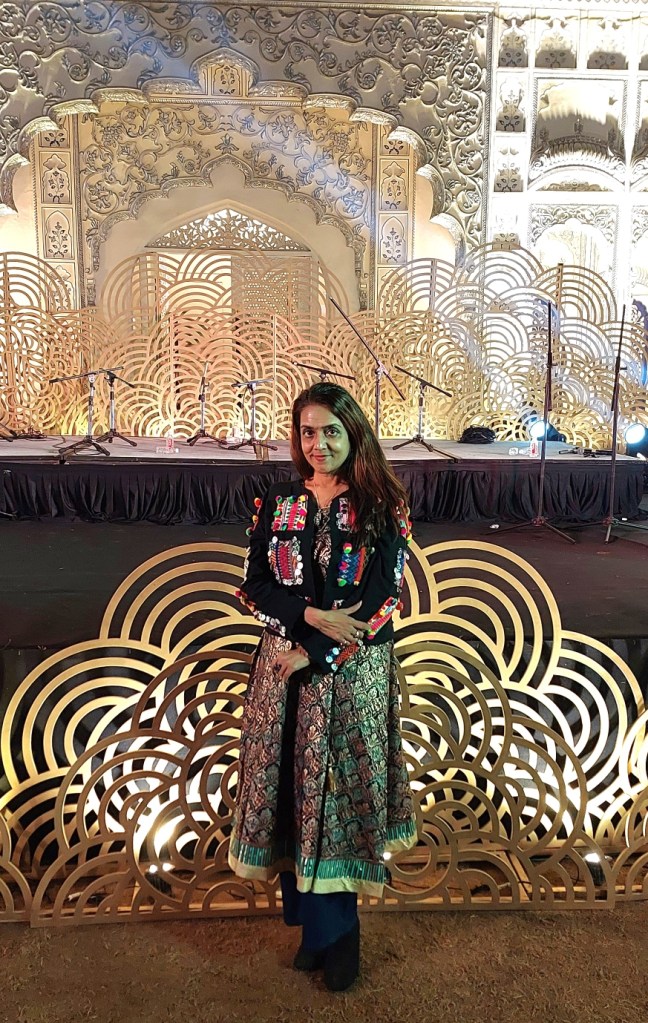
Here’s the real deal…THE FORCE returned to @jaipurliteraturefestival in full this year! Over five days, we heard and saw the finest congregation of creative and path breaking spirits, hearts and minds, flocking together from all parts of the world, to the expansive Clark’s Amer campus. As always, one was overwhelmed with the sheer literary luxury – your daily buffet of choices were between Booker Prize Winning voices, Sahitya Akademy award winners, Pulitzer Prize Winners, Padma Vibushan winners, even headlining mistresses of translation (like Daisy Rockwell who translated this year’s Hindi masterpiece novel, The Tomb of Sand, Winner of the Intercontinental Booker Prize).
The Festival continued it’s unique and ambitious tradition of representing all Indian national languages and multiple foreign languages with sessions spread across five venues with over 250 speakers. Some notable speakers included Abdulrazak Gurnah (2021 Nobel Prize in Literature winner), Bernardine Evaristo (joint-winner of Booker Prize 2019), Deepti Naval (actress and writer of the recently released A Country Called Childhood), Jerry Pinto (Mumbai-based journalist, writer, and translator), Merve Emre (Turkish-American author and literary critic), Rana Safvi (American-Canadian author and filmmaker), NoViolet Bulawayo (2022 Booker Prize shortlisted author of Glory), Tanuj Solanki (2019 Sahitya Akademi Yuva Puraskar winner), and Vincent Brown (American historian and academic), among others. We also had the fiesty Shobhaa De launch her latest…INSATIABLE…a book that is truly proving to be everything but Profound, Pedantic and Pretentious!!!
FICTIONAL ‘TRUTHS’ VS REPORTAGE
As always, many sessions threw up seminal new insights on a whole host of topics. A rivetting one titled Where Does Fiction Come From? Featuring Deepti Kapoor, Ruth Ozeki, Amit Chaudhuri and Shehan Karunatilaka in conversation with Alexandra Pringle, brought to light how the truths revealed in fiction are always multi-layered, “Touching on emotional truths, unconscious forces, physical truths, societal truths, interpersonal dynamics and realities, while shielding the author who is spread over the many characters in the book, allowing the author to be present behind many masks!”
This insight, shared by Ozeki, opened a new way of seeing the power of fiction, which was richer in ‘truths’ unlike journalistic reportage which has a more uni-dimensional, time bound approach to truth.
ARE WE TRULY SEEING THE END OF JOURNALISM?
There were uncomfortable revelations about “The demise of journalism” by veteran columnist, food critic and TV personality Vir Sanghvi, whose session Food For Thought, saw him confessing, that earlier “it was a huge aspiration for a politician to be on the cover of an India Today, but today, it makes far less of a difference now….even though, as the moderator Mandira Nayar noted, “politcal reportage is still the most respected genre of reporting.”
One of the key reasons for the loss of power with journalistic curated content, clearly, is that social media platforms give everybody their own share of voice, making media vehicles redundant. Also, traditional media in India is heavily corporatised, which means its business agenda often overrides content freedom. Governments and politicians who have mastered the digital game win the electorate and put their best fake and real agendas out there.
I myself recall Rajdeep Sardesai talking at a Tata Lit Live!,session in Mumbai, about how PM Modi had a full team employed 24/7 to post about his engagements, new initiatives and campaigns on social media, which made him far more relateable to a young electorate, than ‘Shehzaada’ Rahul Gandhi who was usually telephonically ‘switched off’ post 6pm, as he hung out with friends at some elite club. And of course, even actress Kareena Kapoor was seen telling Karan Johar in a live stage interaction at the opening of the MAMI Festival, back in 2019, “We put everything up on instagram today..The new make up tricks, our holidays, new borns, exercise routines…there’s nothing much to tell a print media journo…it’s boring for us to repeat everything for a story that will be seen a lot later!”
THE ETERNAL LITERARY QUEST
Strangely, however, books continue to pour forth from determined communicators, thinkers, content wizards from around the world. This was itself a heartwarming fact given human beings statistically have attention spans of seven seconds today – officially smaller than a donkey’s!😂
THE RIGHT TO SEX!
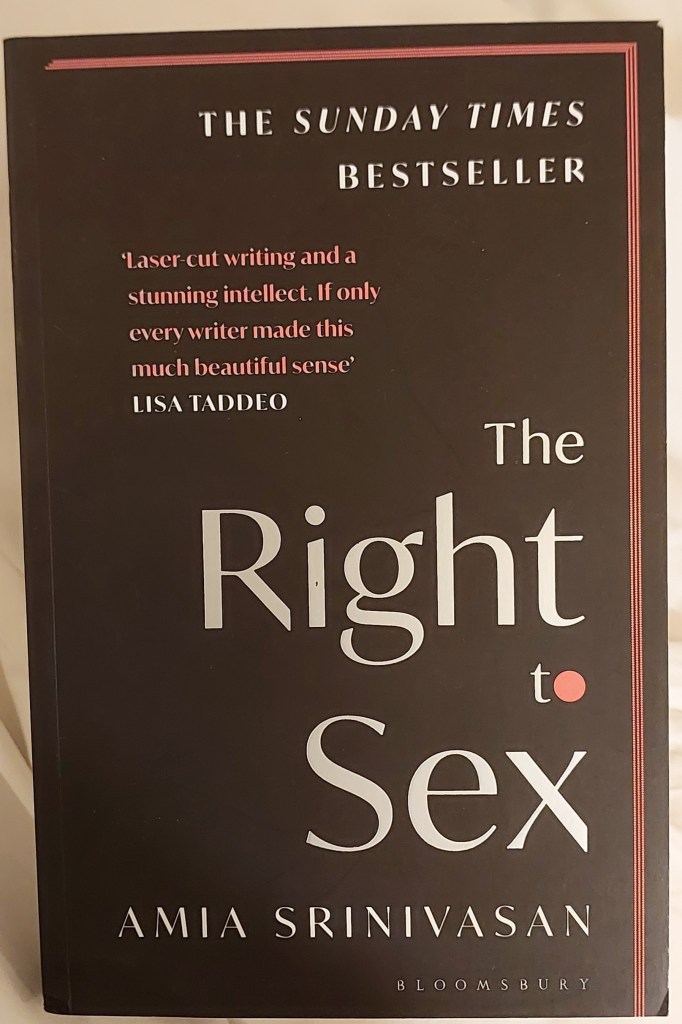
One noticed that many of the stellar insights emerged from writers employed as professors, from the world of academia, like the brilliant Amia Srinivasan, whose session, titled after her book, The Right to Sex, was highly revelatory. Srinivasan, currently the Chichele Professor of Social and Political Theory at All Souls College, Oxford, has also been a prolific author who has written on sex, the politics of pronouns (he, she, it)….among many other subjects. The Right to Sex is her first book, and already being billed as a classic in the world of academia as it consists of sharply observed essays looking at codes of patriarchy and entitlement around sex, the forces of capitalism and even state racism prevailing in around sex. Questions from the audiences were also brilliant, asking about marital rape as a widely unreported crime, as also the ‘ME Too’ movement that swept over the entire world…it was a joy to listen to her nuanced insights …it’s rare to listen to a feminist philosopher who believes compassion between male and female forces..not confrontation..has the key to better, equitable relating. Post session, it was a joy to meet with the humble feminist academic, and I do hope to dedicate an exclusive blog to her work post reading my signed copy.

GURU TO A VERY CONFUSED WORLD!
Marvelous insights were gained into Swami Vivekanda’s life and mind, in a session dedicated to a book by scholar Ruth Harris, titled, Guru To The World, the Life and Legacy of Swami Vivekananda. This was one young voice, who took the Advaita philosophy to the World’s Parliament on Religion in Chicago, on that unforgettable date, 9/11/1893! His words to this day ring with poignant pride in our core Hindu civilisational values: “I am proud to belong to a religion which has taught the world both tolerance and universal acceptance.”
The radicalisation of the Hindu faith in our times, is something we can’t deny, however! But something else became a point of intrigue in this session.The Hindu monk, philosopher, teacher and disciple of the mystic, RamaKrishna, seemed to have his guru’s deep admiration for woman’s true power and potential, as he “said he would like to be reincarnated as an American woman.” Why American? The rivetting answer we got was, “His guru, the mystic RamaKrishna, was a worshipper of Goddess Kali, and perhaps Vivekanda’s deep feminism (he had mastery of typically female domains like cooking and sewing) was rooted in this love for the divine feminine. The reason he said ‘American’ was because possibly at that time, Indian women did not have the agency, the independent stance that they have today,” shared Ruth.

ROHINI NILEKANI: FAITH IS FOREMOST
A session titled ‘Samaj, Sarkaar, Bazaar – A Citizen First Approach’…blew me away because no matter what limitations moderator Vir Sanghvi put before Rohini Nilekani, about the ordinary citizen not being truly empowered to create massive positive shifts..Rohini held forth with utmost optimism, citing the donations given by the middle classes (not necessarily the corporate sector only) to help the less privileged during the Pandemic. She had an astounding knowledge of the number of schools now available to educate a new generation of non urban Indian children, she had no qualms about the brain drain as she felt “all the top CEOs of tech companies are Indian, and these kids have tremendous potential to bring new knowledge back to contribute to India.” She also felt that if communication remains open between Indian companies and this Gen Y…then geography is TOTALLY irrelevant. Her unbridled optimism about India and her salutary belief in positive changes saw Vir asking the audience post session for a show of hands for those who would join up with organisations working for social change..and lo…many, many hands did shoot up!
A (HIS) STORY OF ART WITHOUT MEN!
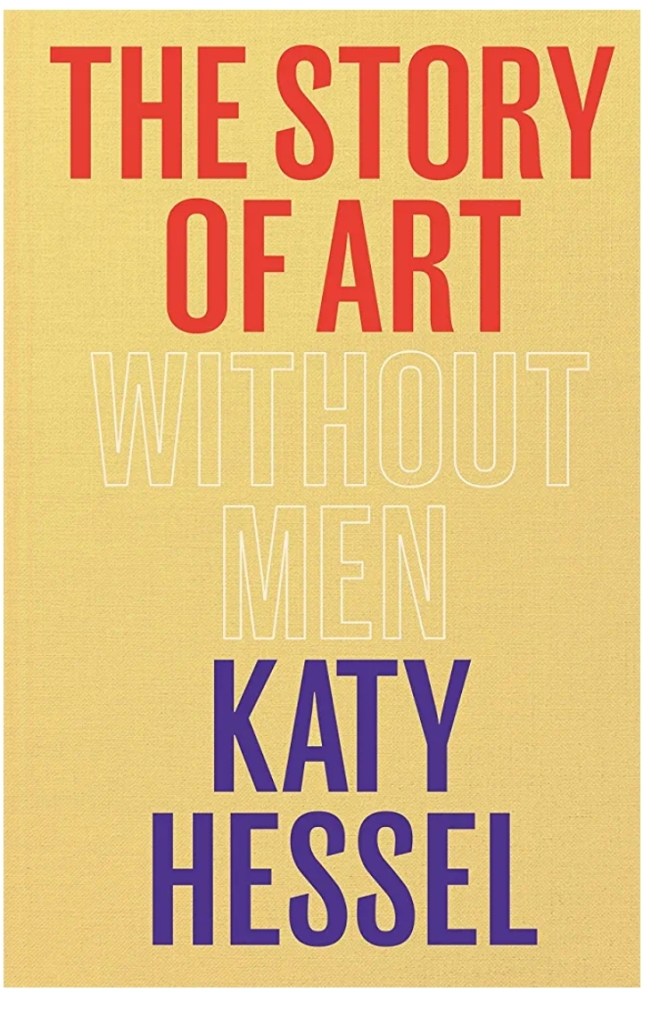
Katy Hussel, author of A STORY OF ART WITHOUT MEN proved to be so passionate about her research into the invisibility of female artists through time, she had us enthralled for a good hour! Her mission with this book, was to create a corretive art history, We discovered that most women artists’ careers were sacrificed at the altar of marriage and children, while the wives who did persist with their art practice often married artists and painted anonymously, on behalf of them often, working in their husband’s studios…while he, not she, appropriated full credit for the work! Some women started signing off the works in symbolic ways, like hidden, miniscule self portraits, so as not to ruffle feathers. This is interesting because the same often happened with women writers, many took on male pen names when published!

We find out that The Royal Academy of Art has never hosted a solo exhibition by a woman in their main space. The National Gallery was founded in 1824 and held its first major solo exhibition by a female artist, Artemisia Gentileschi, in 2020. The first edition of EH Gombrich’s supposedly definitive The Story of Art featured no female artists in its first edition in 1950 – and one woman in its 16th edition. In 2015, the curator and art historian Katy Hessel “walked into an art fair and realised that, out of the thousands of artworks before me, not a single one was by a woman”.
Katy made a reference to India’s earliest contemporary female artist, Amrita Shergill, elaborating on how courageous her journey was (see embedded video below). She also gave the example of Plautilla Nelli, who entered a nunnery in Florence at the age of 14 in 1538, set up an all-female workshop there, had a stellar career and was one of only four women namechecked by the Renaissance art historian Giorgio Vasari in his Lives of the Artists!
Little wonder Katy’s book sold out at the JLF bookstore…being so richly imbued with insights, research, fascinating anecdotes and images of women artists and their art. This session will continue to educate me as I look to order the book and rebook at the history of global art…being a part time artist!
‘NOBEL’ VOICES OUT OF AFRICA: CHIGOZIE OBIOMA AND ABDULRAZAK GURNAH
Being Indian, we relate easily to the low cultural self worth, historical amnesia and fiscal ravages of being colonised, even as the decolonisation process is unfolding slowly in India with Hindi titles now visible in public spaces and across shops and restaurants. We also see our former coloniser in deep economic crises, energy crisis, strikes disrupting the world famous Tube transport system, doctors and nurses of the NHS striking, Heathrow processes in a mess. This is perhaps the Universe striking hard, albeit centuries later, saying, “Enjoy Third World chaos and their cruel summers!”
In a session titled, Road to the Country: In the Words of Chiguzie Obioma, we got deep insights into Nigerian culture, languages, conflicts and how tenuous resolutions have presented multiple dimensions to an ancient land taken over by brutal colonialism. His prize-winning novels The Fishermen and An Orchestra of Minorities reflect the socio-cultural realities of his country even as the people strive to build a free nation in the midst of divisiveness and differences. His essay ‘Pride and Punishment’ is a compelling statement on the beauty and complexity of Nigerian heritage. In conversation with Manasi Subramaniam, Editor-in-Chief at Penguin Random House India, (who joked that Obioma would be shortlisted for a Booker Prize even for a grocery list;) led the discussion into rich territory. Obioma also gave us hints about his upcoming book and the narratives that have formed his writing life…watch this space!
TITANIC ACHIEVERS FROM A TITANIC CITY: JAVED AKHTAR & PT HARIPRASAD CHAURASIA
The other sessions took me back to the magic of my own city, Mumbai, and how it somehow brings epic dimensions of fame and success to hardworking, high integrity creators. Festival Director Sanjoy K Roy conducted wholesome tete-a-tetes with two such titans: Javed Akhtar and Pandit Hariprasad Chaurasia. I have been fortunate to have met and interviewed both legends in the course of my journalism career, but there were some revelations that will always stay with me from these sessions. One, when Sanjoy asked Javedsaab what sort of characters he most enjoys creating, and he said, “The villain! Because the villain operates away from religious conditioning; he is truly a free spirit, unfettered by a moral conscience!” He gave the example of Sholay’s Gabbar Singh, portrayed with highly sadistic overtones, and who still remains immortal in the canon of Hindi cinema villains. “He was both cruel and a born leader…and no motives were assigned for his cruelty…”ye bhi bach gaya saala” he says, and then fires away at his own henchmen. I love creating villains…” he laughed, revealing something one would never have otherwise guessed! Roy also the touched upon the creation of Amitabh Bachchan as the Angry Young Man; a character that embodied the voice of the voiceless in the tumultuous late 70s. As one heard Javed’s views, one saw that he actively sought out counterpoints to established ideas. Also, in a country besotted by different versions of Godhead, he is a total atheist!
BREATH OF GOLD: BY SATHYA SARAN
The session featuring Pandit Hariprasad Chaurasia, (born on July 1, 1938 in Allahabad, Uttar Pradesh) was based on Sathya Saran’s recently released biography of the maestro, titled Breath of Gold. Sanjoy sensitively touched upon the tragedy of Panditji’s early years. Chaurasia was just six-years-old when his mother passed away. His father, who was a wrestler, wanted Hariprasad too to take up the sport, but somehow, though he did train with his father, it became obvious that music was his true calling. He got himself a guru to learn how to play the flute, and then took up a job with All India Radio in Cuttack Odisha. In 1960, Chaurasia was transferred to Mumbai, where he met many renowned musicians. He evinced interest in attending music lessons from classical music teacher and surbahar (bass sitar) player Annapurna Devi. She agreed to take him under her wings on the condition that he would unlearn all that he knew. Chaurasia showed his commitment by switching his style to become a left-handed flute player.

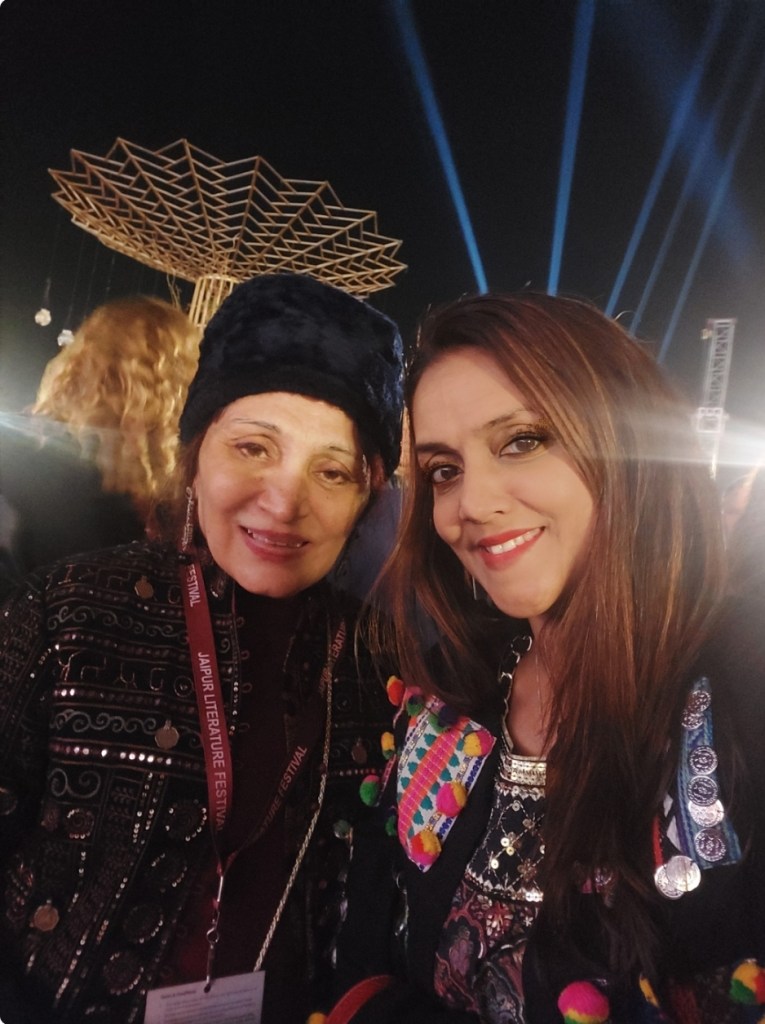
During the session, Hari-ji also called Lata Mangeshkar a living ‘devi’ and said he was almost in tears when he had his first ‘darshan’ of her. Thereafter the two became great friends and she would insist on him being her flautist for any song that required one! Hariprasad also praised song lyrics by Javed Akhtar, revealing how sometimes they tweaked a tune just to accommodate the words he penned!
It did seem strange that Hariji was reluctant to discuss one of his most successful partnerships! In 1967, he and santoor maestro Shivkumar Sharma began working in films under the assumed name Shiv-Hari. This partnership led to extraordinary music for films like Silsila, Chandni, Darr, Lamhe, Faasle, Sahibaan and Vijay. The two also changed the game when they composed an instrumental album titled Call of the Valley, which put their music on the world map, attracting interest from virtuosos across the world like George Harrison, Bob Dylan, Paul McCartney and David Crosby!
Sathya Saran shared how when she started putting down Pandit Hariprasad’s life story, she felt it was directed by a higher force, leading him from strength to strength. To wit, in 1968, Chaurasia found himself collaborating with the world’s greatest rock n roll band, the Beatles. His flute was featured in the track titled The Inner Light, released as a single. He also collaborated with Garbarek, Ken Lauber and John McLaughlin. Today, Panditji may not have the stamina to pull of a performance, but he can gaze with pride as the students of his gurukul, established in 2006, hold audiences spellbound. he founded the Vrindavan Gurukul in Mumbai to train students in Hindustani classic music.
Hariprasad Chaurasia once admitted though he was not interested in wrestling during his early years, the stamina and strength that he gained during his wrestling-training days still helps him in playing the flute to this day.
Unlike many classical musicians who have been part of families steeped in a musical practice, Hari Prasadji is credited with not only having mastered the instrument independently but also developed a distinct style by dint of experimentation, dedication and rigorous practise. Today, he leaves behind his Legacy with his gurukul, which always miraculously got the funding it needed!
INSATIABLY YOURS: SHOBHAA DE
This was a session I would not have missed for the world, having met, interviewed and commissioned articles and columns with Ms De…who has also stood by my humble effort at writing and launching books over the last decade or so! So I have done the next best thing…put aside all other books and started reading this one first!
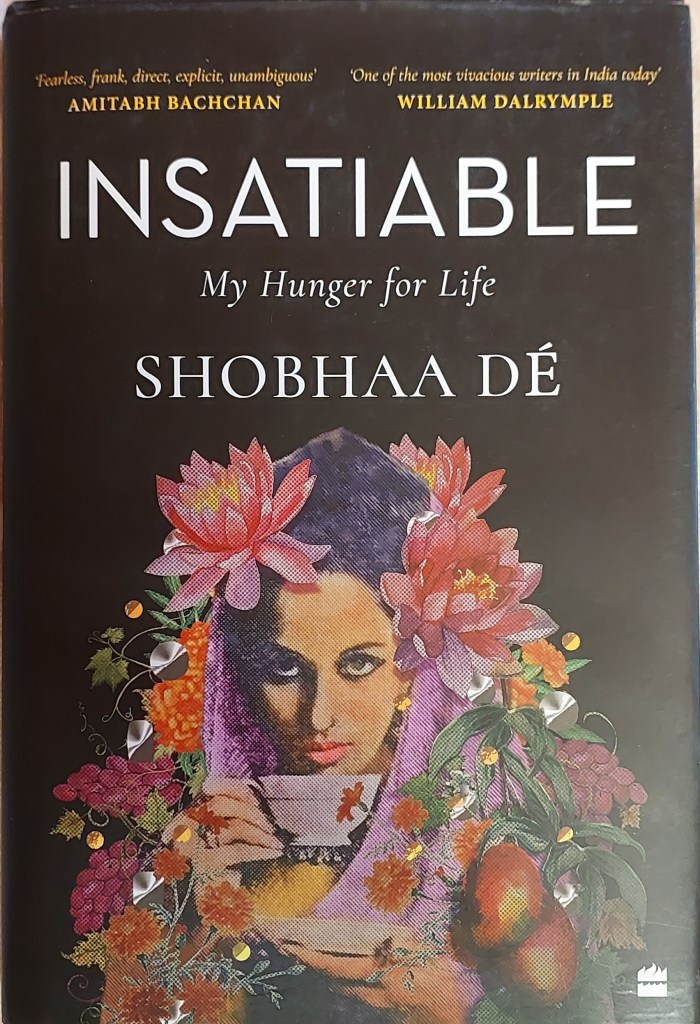
Do I like it? To be honest, De’s books are always infectious with their insouciance. Her voice is always provocative, filled with attitude and chutzpah. I will add to this review once I finish the book! But to lure you into her unique tome, toasting her 75th bday, I carry here a delicious excerpt: “Happy tears are the best tears, I wanted to explain. But [my grandchildren] are a bit too young to understand that. The day they do, we will weep together.”
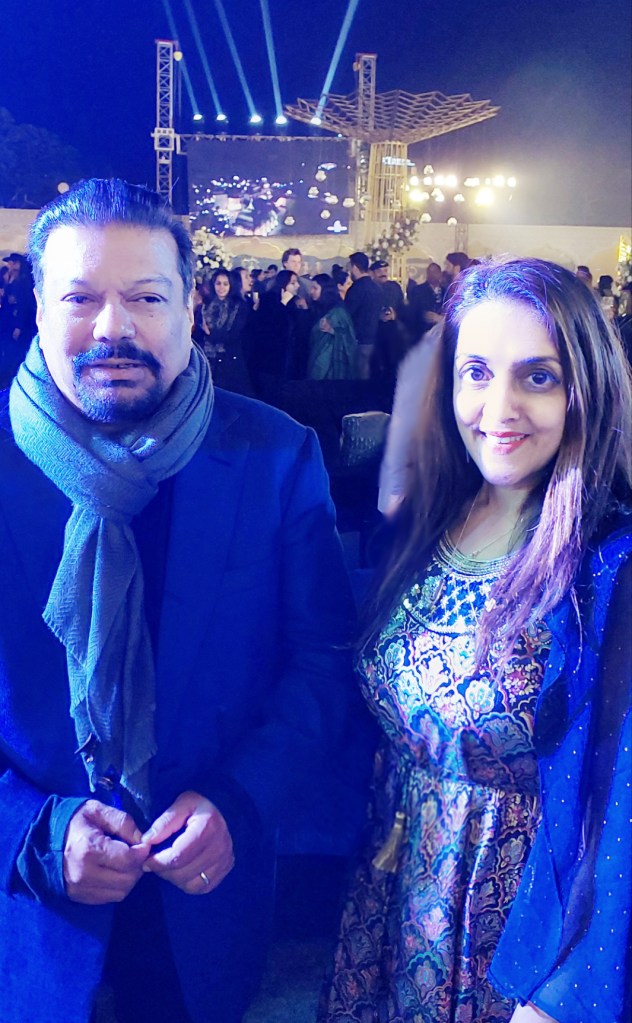
And that’s my JLF Diary for now folks! To understand the vibrant, vivacious JLF evenings, check out the videos from the Writers Ball, the Heritage Night at Amer Fort and Literary Agent and Jaipur’s grand dame of literature, Mita Kapur’s house party. Til we meet (in Jaipur) next year..adios or alvida!
POWER CHAT WITH AN ITALIAN GUEST AT THE WRITERS BALL

 LIFE OF A MAGAZINE EDITOR
Thank you for a lovely peek into the JLF!
LikeLike